Unpacking the Implications of the National Register of Citizens (NRC) Exercise in Assam

READ THE CURATED ANALYSIS BY CPR SCHOLARS


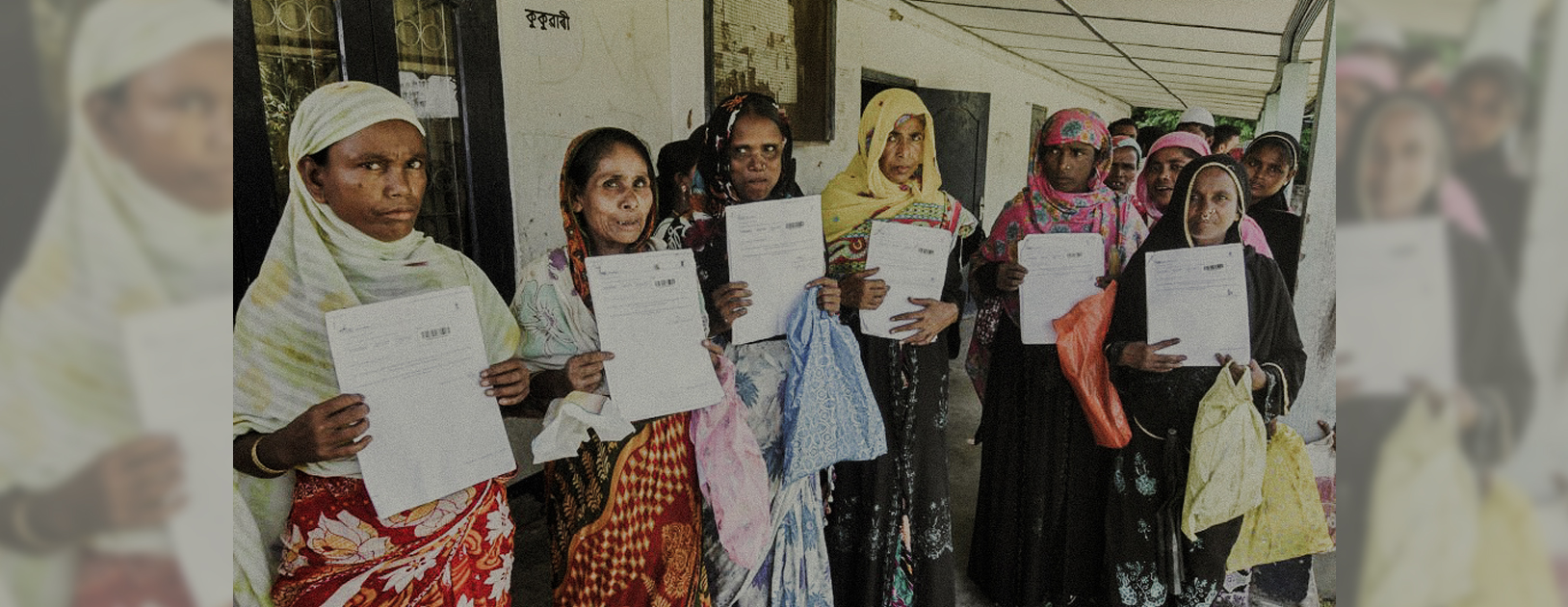
The final list of the National Register of Citizens (NRC) in Assam was published in August this year. The objective of the list was to identify illegal immigrants in the state. On publication, it was discovered that nearly 2 million people have been excluded from the list, thus making them vulnerable to the threat of statelessness.

Scholars at CPR have closely followed the NRC exercise and analysed its implications. In July 2018, Honorary Research Professor, Sanjoy Hazarika, wrote in Economic & Political Weekly, about defining citizenship in Assam. He points that the publication of the NRC is unlikely to resolve the controversy over illegal immigration from Bangladesh, which spans over four decades. His article can be read here.

In the curated analysis below, CPR scholars unpack the implications of this exercise, raising critical questions about citizenship, rights and the role of bureaucracy:

Yamini Aiyar writes in Hindustan Times about how the NRC has brought to light the challenges to the ‘construction of citizenship in contemporary India.’ Aiyar highlights that the NRC ‘is illustrative of the ways in which the politics of religion has increasingly begun to intersect with institutional processes to shape understandings of who is a ‘legal’ citizen.’ She states that the flawed NRC process has provided the political fuel to push the demand for The Citizenship Amendment Bill, a bill that can have dangerous consequences as it fundamentally remakes citizenship in India.

In August 2018, Yamini Aiyar wrote in Hindustan Times about how the State’s excessive reliance on papers and documents for proving citizenship has become an instrument of state coercion and politically driven exclusion. Aiyar highlights how a combination of bureaucratic failure and vulnerability to corruption, made the NRC exercise arbitrary and disempowering.

Yamini Aiyar also appeared on an episode of Hindustan Times’ The Big Picture to discuss the various facets of the NRC exercise, including questions about the idea of Indian citizenship, politics of religion, judicial intervention and bureaucratic capacity.

Sanjib Baruah writes in The Indian Express about how ‘defining hundreds and thousands of people living in the country as non-citizens will create a new form of precarious citizenship — people with fewer rights and entitlements.’ Baruah highlights that while India is unlikely to deport those who fail the NRC test, creation of such a citizenship is ‘uncharted and potentially dangerous territory for a democracy.’

Sanjoy Hazarika writes in The Hindu about concerns over how the State government plans to solve the issue of stateless citizens after the NRC exercise. He questions if there is a detailed process in place while such individuals apply to tribunals and courts for relief, and how the government will deal with those who are declared non-citizens, especially if Bangladesh refuses to take them. Hazarika highlights that the basic dignity of the weak, voiceless and vulnerable is at stake, pointing out that ‘many of those who are off the list are poor, cannot afford lawyers and may not even know of their right to legal aid.’

In July 2018, Sanjoy Hazarika wrote in The Tribune about the implications of the NRC exercise post the publication of the second draft list. Hazarika highlights that ‘the Centre and the state have become unnerved by the specter of looming statelessness that they have neither the skills, understanding or will to deal with.’

Sanjoy Hazarika writes in Al Jazeera about how the campaign to update the NRC has upset everyone, including its proponents. He sheds light on the challenges that those who will have to seek legal recourse due to exclusion from the list will face, highlighting, ‘this is a thankless and frightening prospect of prolonged litigation for even the well-to-do, which a large number of those off the NRC are not. How will they sustain their lives and families, not just the litigation?’


Understanding the working of e-Governance in India

A NEW BLOG SERIES BY ACCOUNTABILITY INITIATIVE


The current government’s steady push on digitising governance follows decades of such interventions. A new Accountability India series chronicles the experiences of former senior bureaucrat TR Raghunanandan on what it has taken to implement a system-wide change, and where the gaps have been.

  • In ‘Wither, e-Governance’, Raghunanandan asks the crucial question of whether innovations in e-Governance will indeed make the government more responsive and accountable to the people.
  • In the second part of the series, he talks about the introduction of desktop computers in government offices and how the transition began with only some officials understanding the full potential of this new technology in increasing efficiency. In ‘Spreading Spreadsheets’, he goes on to recount the value of spreadsheets in removing red tape and easy access to data. Yet, nearly three decades later, the large majority of people in the government have not taken to such innovative tools.
  • In ‘MISRA – and the era of cute acronyms, Raghunanandan recounts his experience of reforming land records in Karnataka using MISRA, an interface he and his team created. At the time, reporting protocols of land administration had begun to fail. Less attention paid to the daily tasks of land record maintenance, coupled with staff shortages and the expansion of welfare responsibilities, was beginning to weaken the land records system. The resultant confusion and uncertainties about land ownership had the potential to derail the entire economic base for the rural economy. As a solution, Raghunandan and team established a computer-aided system that would completely replace the manual system that was in place.
  • In another experiencehe discusses his stint with the tobacco board and how the computer operator was key to the integrity of the system which set quotas and imposed upper limits on what a farmer could sell. It took very little time for computer operators to hack the software. Then, for a price, farmers who exceeded quotas would be able to sell their extra tobacco.
  • Thus, while establishing good e-Governance infrastructure is essential, the human capital that goes in maintenance and implementation cannot be overlooked. As Raghunanandan points out in his next blog ‘Grasp’ing the Zilla Parishadthe champions of e-Governance move on even before the systems they develop are entrenched in government processes.
  • He closes the series with a thought provoking look on the dichotomy in the government’s enthusiasm for e-Governance in ‘Attitudes that block e-governance’. He asks if the government is a lot more cautious when it comes to transparent service delivery while this is not the case when making transactions from the citizens to government (such as tax paying) easier.

Understanding the National Green Tribunal

IN CONVERSATION WITH SHIBANI GHOSH


The National Green Tribunal (NGT) has emerged as an important player in Indian environmental regulation. It has issued orders on a variety of issues–ranging from pollution to deforestation to waste management. It recently directed the Delhi government to de-register all diesel vehicles more than 10 years old–a decision being opposed by many stakeholders, including the Central Government.

In the interview below, environmental lawyer and CPR faculty Shibani Ghosh talks about the National Green Tribunal and it’s functioning. Shibani practices before the National Green Tribunal and has written on various issues of domestic environmental law and governance. She is currently editing a book on key principles of Indian environmental law.

Can you tell us about why and how was the NGT established?

The need to set up special environmental courts was highlighted by the Supreme Court of India in a series of judgments, the first one being in 1986 in the Oleum Gas Leak case, and by the Law Commission of India in its 186th report in 2003. The Court was of the opinion that environmental cases raised issues, which required technical knowledge and expertise, speedy disposal, and continuous monitoring, and therefore these cases should decided by special courts with necessary expertise and technical assistance.

The Parliament passed the National Environmental Tribunal Act, 1995 but it was never implemented. Subsequently, the National Environment Appellate Authority Act, 1997 was enacted under which the National Environment Appellate Authority was set up. There were several problems in the functioning of the Authority, including its limited mandate and key vacancies that the government did not fill. The Authority functioned till October 2010 and was replaced by the National Green Tribunal.

The National Green Tribunal was set up under the National Green Tribunal Act, 2010 (NGT Act). The objective of the NGT Act is to provide effective and expeditious disposal of cases relating to the protection of the environment. Even though the Act came into force on 2 June 2010, the first hearing of the Tribunal was held only in May 2011. The Tribunal suffered from serious ‘teething troubles’. Despite being a body constituted by an Act of Parliament, the Supreme Court had to intervene to ensure necessary administrative arrangements were made by various branches of the government for the Tribunal to become functional.

How does the Tribunal function?

The members of the Tribunal are a mix of persons with a legal/judicial background and those with knowledge and expertise in environmental issues or with administrative experience. There is a principal bench of the Tribunal in New Delhi and four regional benches in Bhopal, Kolkata, Pune and Chennai. These are ‘co-equal benches’ i.e. the principal bench is not ‘higher’ in a judicial hierarchy than the other benches. Each bench has a specified geographical jurisdiction. For instance, cases arising from Kerala, Tamil Nadu, Karnataka, Andhra Pradesh, Pondicherry, and Lakshadweep have to be filed in the Southern bench in Chennai. Occasionally ‘circuit benches’ are also constituted. These are specially constituted benches, which visit a particular city for a few days to hear cases relating to that state.

The Tribunal has original (to be the first judicial forum to hear a case) and appellate (review a regulatory authority’s decision) jurisdiction with regard to the implementation of seven environmental laws. These are the Water (Prevention and Control of Pollution) Act, 1974, the Water (Prevention and Control of Pollution) Cess Act, 1977, the Forest (Conservation) Act, 1980, the Air (Prevention and Control of Pollution) Act, 1981, the Environment (Protection) Act, 1986, the Public Liability Insurance Act, 1991, and the Biological Diversity Act, 2002. The notable exception is the Wildlife (Protection) Act, 1972 which is not included. A significant number of cases that may arise under the Wildlife (Protection) Act are criminal cases–and the Tribunal has no jurisdiction over criminal cases.

The Tribunal has original jurisdiction over all civil cases raising a substantial question relating to environment and which arise out of the implementation of the seven laws. This makes the Tribunal a crucial avenue for grievance redressal for persons who wish to highlight environmental issues which have serious implications but are not linked to a single government decision.

For instance, cases relating to the widespread pollution in the River Ganga and Yamuna, increasing air pollution in the National Capital Region, and illegal mining activities in different parts of the country have all been brought before the Tribunal under its original jurisdiction.

While exercising its appellate jurisdiction, the Tribunal decides cases in which a regulatory approval or consent granted (or rejected) by the relevant government agency is being challenged. These approvals or consents are those issued under the seven laws. For example, environmental clearances under the EIA Notification 2006, forest clearances under the Forest (Conservation) Act, and consents issued by the State Pollution Control Boards under the Water Act and the Air Act are included.

Who can approach the NGT?

According to the NGT Act, an aggrieved person can file a case before the Tribunal, and could be an individual, a company, a firm, an association of persons (like an NGO), even if not registered or incorporated, a trustee, a local authority (like a municipal corporation), or a government body (like the State Pollution Control Board). The person need not be directly affected by the project or development in question, but could be any person who is interested in protecting and preserving the environment. There is a time period within which the case has to be brought before the Tribunal, which varies according to the type of case.

What kind of decisions can the NGT deliver, and what is the timeline?

The Tribunal has the power to cancel an approval or consent granted. It can also issue a stop work notice or an interim stay order. It can direct the constitution of a committee of experts to carry out fact finding or monitor the implementation of its orders; and direct concerned government agencies to take affirmative action to prevent or mitigate environmental damage. It can also direct the demolition of unauthorized construction. The Tribunal also has jurisdiction to order payment of compensation to victims of environmental damage or an environmental restoration fine to a government agency for restitution of damaged environment.

The NGT Act requires the Tribunal to hear cases as expeditiously as possible and endeavour to decide the case within six months from the date on which the case is filed. Despite this indicative timeline, it often takes longer as all parties have to be heard and allowed to present necessary evidence, and sometimes, the Tribunal initiates special investigations into facts, which may take up additional time.

Is the verdict of the NGT binding?

The decision of the NGT is binding on the parties, unless they approach the Supreme Court in appeal and the NGT’s order is either stayed or reversed. Failure to comply with the orders of the Tribunal could lead to a fine or imprisonment of the person responsible.

You can read more about Shibani Ghosh’s work on the National Green Tribunal below:

Understanding the Strategies used to address the impacts of Land Use Change

BLOG SERIES BASED ON A CROSS COUNTRY STUDY ACROSS INDIA, INDONESIA AND MYANMAR


People facing/likely to face the negative impacts of land use change may not communicate their grievances immediately. When these impacts are communicated to the project entity or the media or the government and collective action is taken towards addressing the impacts, they become cases of conflicts. The strategies that communities deploy during the course of a conflict could range from a single one-time action for a single remedy to engaging with multiple strategies for one or different remedies.  For instance, an affected community may choose to go to court to seek directions for increasing compensations or addressing pollution harms. Another group of affected people may approach one government agency for addressing water contamination and/or take to the streets to resist additional acquisition of land and/or engage the media to create awareness about the loss of livelihoods. These can take place all at the same time or at different stages of the conflict and the project. Below is a tabular synthesis of key strategies used in the 75 cases of conflicts, as reported in the media, analysed for each of the study countries- India, Indonesia and Myanmar.


* T: Total number of cases in which a particular remedy has been used; S: Used singly; C: Used in combination

The above analysis makes it clear that most often communities deploy multiple strategies. Presented below are examples of how these strategies have been used in the three countries. The examples demonstrate that there are only a few instances when a strategy can be linked with a clear success. Most often they stop short at certain interim outcomes such as an inquiry or an investigation or they start to head towards a specific outcome only to be turned around at a later stage.

Protests

India: The proposed amendments to the new 2013 Land Acquisition Act in December 2014 led to a nationwide farmers’ protest in India. In August 2015, in light of protests and ahead of the Bihar state elections, the government of India held back the proposed amendments and referred the matter to a Joint Parliamentary Committee (JPC).

Myanmar: In Shan State in 2016, 100 farmers from Ye Pu village in Taunggyi planted on 2,000 acres of confiscated land. Between 2010 and 2015, despite the land being confiscated the farmers were allowed to plant on the land on a payment of 10,000 Kyats per acre. In May 2016, the farmers were asked to sign documents transferring the land to the army. These 100 farmers didn’t sign the document and continued planting. The army filed a lawsuit against them for trespassing.

Litigation

Indonesia: Responding to a civil suit, the Bandung administrative court decided in April 2017 that expansion plans for the Cirebon coal-fired power plant in West Java were in violation of the local spatial planning law. The court ordered the project’s environmental license to be revoked.

India: A case against the Parsa East Ketan Besan (PEKB) coal mine was filed before the National Green Tribunal, the special court for environmental cases, and a judgment suspending the forest diversion approval was given. This was challenged by the operating company before the Supreme Court, where the court allowed mining to continue even as the environment ministry was to review its recommendation. The matter has been subjudice since 2014.

Administrative complaints and appeals

Indonesia: In the case of BNJM coalmine in East Barito in Central Kalimantan, the local environment agency on request from communities, collected samples from the river being polluted by the mine refuse. However, this was done after the community of Lalap and Bentont villages had filed multiple complaints with photographs and media reports on the siltation of the river. In this case, strong evidence of the violation of environment laws helped in getting the government to take action.

India: In the case of the proposal to construct the Tadadi port in Uttara Kannada district of Karnataka, local villagers and environmentalists primarily engaged with the District Collector and the regulatory institutions to influence the decision on whether the port should be granted approval. Although the environment ministry’s expert committee recommended approval in December 2016, the project had not been issued a formal clearance letter and has not initiated construction activity.

International Redress

Myanmar: Thilawa is one of the few projects from the delta region in which international redress has been tried. The Thilawa Social Development Group (TSDG) contacted the Japan International Cooperation Agency (JICA) seeking rehabilitation and relocation facilities as per its guidelines. In response, JICA increased the compensation and improved facilities at the relocation site. Although the relocation site still falls short on many of JICA’s own prescriptions, the efforts resulted in certain corrections.

Indonesia: An example of seeking international redress is the case of Batang Thermal Power Plant. In December 2016, the community approached the Japan Bank for International Cooperation (JBIC), the key financer with a petition against the plant. In response, the JBIC visited the site and met with the community but claimed that there was no evidence supporting people’s complaints.

Media campaigns/reporting

Indonesia: Media reporting has always been seen in combination with more than one strategy. Because of constant media scrutiny of Batang Thermal Power Plant and Jakarta Bay Reclamation Project along with the protests against the two, the work on the projects has been slow.

India: This has been an important strategy for affected people, especially when they are working with national and international NGOs and researchers. Two prominent examples of this are visible in the strategies used to address conflicts in the Vedanta bauxite mine in Niyamgiri, Odisha and the actions against setting up of the coal mine in Mahan, Madhya Pradesh. Local struggles were supported by national and international media reporting and public campaigns seeking support against setting up of these projects.

Myanmar: Both the local and international media have kept the issue of land confiscations alive. Big cases such as the Letpadaung mine and Myitsone dam and campaigns against the thermal power projects have been on the radar of the media. Media has been key in influencing certain court cases as well.

While these are only a few strategies, affected communities combine these with several other strategies. Political advocacy, participation in administrative procedure such as public hearings, approaching the project owner, are other ways to seek redress. The study, Understanding Land Conversion, Social Impacts and Legal Remedies in Asia, through the country reports, provides an extensive account of how and when each of the strategies has been used. Through the case studies it tries to explore the question of why certain strategies are chosen and how factors such as stage of the conflict, desired remedies, communities’ capacity and agency and political and policy developments influence this choice.

This is the second blog based on the study carried out by the CPR-Namati Environmental Justice Program, and supported by a grant from IDRC, Canada.

The other pieces in the series can be accessed below:

Union Budget 2017

CURATED ANALYSIS BY CPR FACULTY
BUDGET ECONOMY

As Budget 2017 was announced by the Union government on 1 February, find below a curated analysis by CPR faculty.

Pratap Bhanu Mehta writes in The Indian Express that through this budget the government is trying to steady the ship after the demonetisation shock, explaining how it ‘is an exercise in forward-looking but cautious prudence’.

In an article in Hindustan Times, Rajiv Kumar writes that the budget is what the ‘doctor ordered for the economy’, as it addresses the critical tasks of ‘generating employment, promoting private investment, pushing up consumption, improving delivery of subsidies and public services’. He further writes in The Hindu on how the budget fulfills the three principle goals of reviving domestic investment; generating employment opportunities; and cleansing the economy of black money flows.

Yamini Aiyar writes in Livemint and in a Hindi article in Amar Ujala that the budget has maintained the status quo, as far as social sector schemes are concerned, and has been ‘remarkably silent’ on restructuring the ‘financing architecture for social policy post the 14th Finance Commission’. Avani Kapur reiterates this in another article in Deccan Herald, writing that despite riding high on expectations, Budget 2017 did not offer any major changes in majority of social sector schemes.

Kiran Bhatty writes in The Wire that the ‘attention deficit’ towards education remains unchanged in this year’s budget.

Sanjaya Baru and Rajiv Kumar also debate the budget on CNN News18 and Times Now (above) respectively.

Understanding the Emergence of India’s Census Town: A Policy Research Working Paper

CO-AUTHORED BY PARTHA MUKHOPADHYAY AND MARIE-HÉLÈNE ZÉRAH
URBAN GOVERNANCE

This policy research working paper presents the results of an investigation of selected census towns in northern India. Census towns are settlements that India’s census classifies as urban although they continue to be governed as rural settlements. The 2011 census featured a remarkable increase in the number of census towns, which nearly tripled between 2001 and 2011, from 1,362 to 3,894. This increase contributed to nearly a third (29.5 percent) of the total increase in the urban population during this period.

Only part of this evolution can be attributed to the gradual urbanisation of settlements in the vicinity of larger towns. Instead, the majority of census towns appear as small ‘market towns,’ providing trade and other local services to a growing rural market. The case studies of representative census towns in Bihar, Jharkhand, Orissa, and West Bengal show the role of increased connectivity and growing rural incomes in driving the demand for the small-scale and non-tradable services, which are the main sources of non-farm employment in these settlements.

The case studies also reveal that the trade-offs between urban and rural administrative statuses are actively debated in many of these settlements. Although statistical comparisons do not show a significant impact of urban or rural administrative status on access to basic services, urban status is often favored by the social groups involved in the growing commercial and services sectors, and resisted by the residents still involved in the traditional farming sectors.

The full policy research working paper can be accessed here.

Understanding the Impacts of Land Use Change

BLOG SERIES BASED ON A CROSS COUNTRY STUDY ACROSS INDIA, INDONESIA AND MYANMAR
LAND ACQUISITION SOUTH ASIA

Land use change is defined as planned, government policy induced land transformations with anticipated or unanticipated environmental and social impacts, most often undertaken without prior informed consent of and/or due compensations for the affected, and abetted by failure of administrative or judicial remedies. The CPR-Namati Environmental Justice Program, supported by a grant from the International Development Research Centre (IDRC), Canada, studied land use change in India, Indonesia and Myanmar, and found that the impacts of such land use change can be broadly categorised into three categories:

Displacement and dispossession: Individuals or communities lose their homes in exchange for none or meagre compensations, and are expected to relocate to areas identified as rehabilitation sites or migrate to new areas on their own.
Loss of livelihood: This relates to losing out or giving up access to parts of or entire areas on which livelihoods are dependent. This could include agricultural lands, fishing harbours, forest areas and grazing lands. This may occur separately or in addition to physical displacement, causing an incalculable impact on both livelihoods and quality of life.
Environmental degradation and pollution: This leads to a decline in fish catch, agricultural productivity, groundwater contamination, and other related impacts. These have lasting effects on the health, economy and social lives of individuals and communities as a whole.
The table below provides trends and examples of how different sectors have contributed to negative impacts for communities in India, Indonesia and Myanmar.

India

Indonesia

Myanmar

Displacement and Dispossession

A study by the Indian Institute of Technology, Rourkee, estimates that 50 million people have been displaced due to ‘development projects’ over 50 years in India. The study states that of the 50 million people, 16.4 million were displaced by dams, 2.55 million by mines, 1.25 million by industrial development and 0.6 million by wildlife sanctuaries and national parks
One of the largest dam-induced displacement projects in the recent decades has been the Polavaram Multipurpose irrigation project that involved submergence of 42,000 ha of land across the 3 states of Andhra Pradesh, Chhattisgarh and Odisha. The estimated number of people facing displacement is 1,17,034 across 276 villages (as per the 2001 Census). All the displacement is in the state of Andhra Pradesh.
From 1970 to 2008, there have been approximately 100,000 people who have been displaced by the creation of Protected Areas (PAs).
Around 40% of the project-affected and displaced people from 1951 to 1980 belonged to tribal communities.
Freeport McMoran’s investment in copper and gold mining in West Papua was the first FDI agreement that Suharto signed after becoming the president. It displaced 15,000 people.
The number of landless farmers has risen from a few to 30% from 2004 to 2009 in Sumatra.
The Jabotabek Urban Development project in the suburbs around Jakarta displaced 40,000 to 50,000 people.
An impending 480-megawatt hydroelectric dam in Seko in North Luwu district of South Sulawesi is looking to displace members of indigenous communities of Pohoneang, Hoyyane and Amballong.
Conservation areas cover 28.2 million hectares in Indonesia and have largely been about exclusion of communities.
Recently, in Labuan Bajo Komodo Conservation area there have been reports of sale and purchase of indigenous people’s lands without their consent.
‘Land grab’ is a widely acknowledged term to refer to the state-driven forced acquisition of land.
The Letpadaung copper project in Sagaing Region involved the acquisition of 6,785 acres of land, largely farmlands, from 30 villages. 245 families from 4 villages have been forcibly moved to resettlement sites. 196 families are refusing to move at the risk of forced eviction.
The Asia Highway, a large-scale project, has a section of it passing through Southeastern Myanmar, crossing 17 villages and 3 townships in Dooplaya and Hpa-an districts. The project was initiated without consulting the locals and has caused eviction from several of these villages.
The construction of Thilawa Special Economic Zone is a prime example of this. The military government started confiscating land from the local farmers in 1997, using the land laws prevalent then, offering very little or no compensation.
Loss of livelihood

The land acquisition law of 2013 in India has added a specific section on assessing livelihood loss through social impact assessments and ascertaining compensations for the same. It clearly laid down the definition of ‘Affected Families’ to include farm labourers, fishers, share croppers, forest rights holders, gatherers of forest produce and so on.
The Parsa East Kete Besan coal mine in Chhattisgarh involves land use change of 2,711.034 ha. The mine is located in the Hasdeo Arand region, which is home to a large population of tribal and other traditional forest dwellers.
In another case, the operations of the Coastal Gujarat Power Limited in Kutch in Gujarat, have impacted two important fishing harbours. This was marked by a reduction in fish catch, impacts of coal ash on fish drying activities, particularly carried out by women, and constrained access to the fishing harbour.
The state in Indonesia considers large tracts of land as ‘non-productive’ and gives them out to oil palm companies despite the fact that these lands have claimants under the customary law and many smallholders cultivate them.
In the case of PT KEM, the gold mine impacted alluvial mining being pursued by local people in East Kalimantan. The loss of livelihood could never be recovered as all those who lost their livelihood could not be absorbed as part of the workforce in the mine.
Fish population in Buyat Bay in North Sulawesi has declined due to PT Newmont Minhasa Raya’s submarine tailing disposal.
Recently fishermen in parts of Komodo conservation reserve have been denied access to their fishing grounds, which forces them to fish farther resulting in higher costs. Access to the forest part of the Komodo conservation area is also blocked for communities to collect firewood.

Farmers made landless, find it hard to secure jobs; the random jobs they pick up are unstable and pay very little.
The construction of Mone Hydropower Dam led to submergence of 13 villages. The government authorities deemed that they were not responsible for compensation or relocation allowance to the villagers because the displacement was not caused by land confiscation but by the flood.
30 villagers from Char Khan fishing village were asked to vacate the area for the first phase of Dawei SEZ – when 3 fishers refused to move, they were imprisoned for a month.
The Labutta Township Forestry Department sued 12 local farmers for illegally fishing, breeding prawns, and felling wood in a forest reserve.
Government-licensed mining has impacted small-scale jade collection. Now, some of them make a living by picking pieces of jade in the waste dumped by mining companies.
Environmental Degradation and Pollution

Around 49 areas have been declared unsafe for human habitation in the Raniganj coalfield area of West Bengal.
The Damodar River is the major source of water in the regions of West Bengal and Jharkhand and is perhaps the most polluted river in India as it receives wastes from many industries situated on its banks.
Studies have indicated that open cast quarries, coal washeries, thermal power plants, coke-oven plants, cement factories and fertiliser plants add to air pollution.
The construction of large dams and ports alters the relationship of water and land, destroying the existing ecosystem balance, hydrology and fisheries.
Air and water pollution and soil erosion are the two main issues that occur when large areas on landscapes get changed for the construction of roads and railway lines.
Freeport’s Grasberg in Papua gold mine spread across 2.5 million hectares of pristine alpine forests, lowland montane forests, freshwater swamps, mangroves and coastal ecosystems, dumps an extraordinarily large amount of waste (as per its own estimates 700,000 tons per day) into local streams.
Lake Limboto is situated right next to Gorontalo city and the land conversions for this ever-expanding city have taken a toll on it. In 1932, the lake used to span over 70 square kilometres but today it measures only 25 square kilometres in area.
In North Borneo, fisher interests and shipping uses are in conflict. The coastal law doesn’t give any priority to fisher people. It doesn’t recognise fishers’ first right to the sea and categorises areas for fisheries as well as activities such as tourism and mining under the same ‘general use area’ category. This creates a conflict between the coastal law and fisheries law.
The Tigyit Coal Mine spews dangerous chemicals and pollutes the water and air. The operations compromise access of communities to their fishing areas, farms, and forests. Waste from the mine is dumped either on the grazing lands or on the path to the grazing areas.
People living close to industrial projects, who most often are the ones initially displaced for initiation of these projects, find themselves facing pollution impacts on a daily basis. Toxic and harmful wastes are discharged in local water sources and garbage is dumped on their farms and grazing lands. Air pollution and decline in groundwater are other challenges they are forced to live with.
Lakes in industrial zones have been reported with high level of contaminants. Wastewater from the industries of Shwe Pyi Thar Industrial Zone is released indiscriminately into nearby water sources.
Often, these impacts do not occur in isolation – loss of land essentially leads to loss of livelihoods; many times relocations after land-loss force people to stay close to industrial and development areas facing pollution on a daily basis; and environmental degradation translates into loss of income for communities dependent on natural resources. The study, Understanding Land Conversion, Social Impacts and Legal Remedies in Asia, is an attempt to bring out the interconnections, complex nature and severity of these impacts by highlighting these and several other trends and examples of land use change through the detailed country reports and granular case studies.

This is the first blog based on the study carried out by the CPR-Namati Environmental Justice Program, and supported by a grant from IDRC, Canada.

The other pieces in the series can be accessed below:

Understanding the Strategies used to address the impacts of Land Use Change
Understanding the Outcomes and Remedies sought for impacts of Land Use Change
Detailed Studies of cases of Land Use Change Conflicts: Part I
Detailed Studies of cases of Land Use Change Conflicts: Part II

Understanding the Land Rights of Tribal Populations in Scheduled Areas

KEY FINDINGS FROM A STUDY BY THE LAND RIGHTS INITIATIVE AT CPR
RIGHTS LAND ACQUISITION

Though only 8.2% of the total population, the Scheduled Tribes (ST) constitute 55% of the people displaced since independence due to the construction of dams, mines, industrial development and the creation of wildlife parks and sanctuaries. Poverty and landlessness is rampant amongst the STs. 51% of all STs are below the poverty line compared to 40.2% for the national average, and 65% of the STs are landless as per the 2011 Census. Therefore, clearly, this group has disproportionately borne the burden of economic development.

This, despite the fact that the Fifth and Sixth Schedules of the Indian Constitution carve out a separate legal and administrative framework for certain designated tribal majority areas within the territory of India. The Fifth Schedule designates tribal majority areas in ten tribal minority states within peninsular India including, Andhra Pradesh, Telangana, Gujarat, Jharkhand, Chhattisgarh, Himachal Pradesh, Madhya Pradesh, Maharashtra, Orissa and Rajasthan. The Sixth Schedule designates such tribal majority areas in north eastern states, including Assam, Meghalaya, Mizoram, and Tripura. Of these, Meghalaya and Mizoram are tribal majority states.

This begs the question as to why despite the existence of special constitutional and legal provisions for safeguarding the rights of tribals to land and also special affirmative action provisions for the STs, they continue to remain the most displaced, most vulnerable, and most impoverished of all groups in India. Through archival and field research in the states of Gujarat, Andhra Pradesh and Telangana, the CPR Land Rights Initiative project on ‘Land Rights in the Scheduled Areas of India, attempts some preliminary answers to this question.

Key findings

No data existed on the extent of geographical area in the Scheduled Areas. Based on extensive 2011 census village and district level mapping of data, the Initiative has determined that 10.5% of all India’s geographical area lies within the Scheduled Areas.
Based on Census 2011 data available with the Initiative, even though the Scheduled areas were designated tribal majority areas, on average today, only 30% of the population in the Scheduled areas is tribal. That is, in actual fact, the designated tribal majority areas are tribal minority areas today due to continuous displacement of the tribals.
On all three narratives of development, representation, and rights to land, the Scheduled Tribes are pitted against the dominant mainstream of Indian society. The power imbalance between the tribals and the mainstream society requires both protective laws and a powerful state disposed towards the protection of the Scheduled Tribes.
The special protective provisions in the Fifth and Sixth Schedules cannot be seen in a vacuum but have to be seen against the backdrop of a contrary legal regime of land acquisition, forest and mining laws, through which the state actively displaces and facilitates the displacement of tribals from the Scheduled Areas.
The protective legal regimes fail also because of meagre financial allocations for their implementation and active subversion or confused implementation of the regimes by the administration.
A presentation of the key findings are available in the video (above). The panel discussion that followed can be accessed here. The Initiative also analysed Supreme Court cases on land acquisition over 66 years, delving deep into the massive power imbalance between the state and land losers. A video recording of this analysis can be accessed here.

Understanding Out of School Children (OOSC) in India: the Numbers and Causes

NEW WORKING PAPER CO-AUTHORED BY KIRAN BHATTY


The number for out-of-school children [OOSC] put out by various official sources in India, show wide variations. The Ministry of Human Resource Development (MHRD) survey (IMRB-SRI, 2014) estimate of this figure is 6 million, while for the same year, the National Sample Survey (NSS) figure is 20 million.

Each figure is based on an estimate of ‘never enrolled’ and ‘dropped out’ children. A closer look reveals that problems exist not just in the definitions, especially of drop out used by each source, but also in the methods of estimating ‘never enrolled’ as well as ‘dropped out’ children. In addition, discrepancies and inefficiencies in the overall system of collecting and collating data compound the problems.

This study by Senior Fellow Kiran Bhatty attempts to address these issues through developing a more direct approach to calculating ‘never enrolled’ children based on a child census, as well as identifying OOSC using a broader understanding of absenteeism or ‘dropped out’ children based on irregular attendance.

It also analyses the links between attendance and socioeconomic and school factors. In doing so, it fills an important gap in the literature by questioning the definition/understanding of an ‘out-of-school’ child, as well as by using methodologies not employed before to estimate children not enrolled in school and to track attendance of those enrolled over an academic year.

The findings of the paper are divided into two sections – the first section describes the survey findings and estimates of OOSC and attendance patterns of students and teachers; while the second section provides an analysis of the links between child attendance and various household and school level factors.

The full working paper can be accessed here.

Understanding working migrant women’s narratives of ‘mobility’ in Delhi

BOOK CHAPTER CO-AUTHORED BY EESHA KUNDURI
URBAN ECONOMY

Context:
Women’s migration has typically been understood as a relational phenomenon, where women are generally seen to be migrating for marriage or as accompanying family members (according to data from the Census and the National Sample Survey). This has been acknowledged as a key shortcoming in the way macro-data captures women’s migration, owing to the nature of the data which attributesonly a singular reason for migration.

Recent studies, however, have suggested that even if women migrate with families or due to marriage-related reasons, livelihood options at destination are factored into by households as part of their migration decisions.

Therefore, migration in general and women’s migration in particular, is complex and multi-faceted, and there is a growing recognition to unpack the nuances of people’s lived experiences of it. In light of this literature, and in the context of low workforce participation rates for women in Delhi (about 10.7 % as per 2011-12 data from the National Sample Survey), researchers Eesha Kunduri and Sonal Sharma decided to engage more deeply with work-life histories of women migrants. The objective of the research was to provide insights into women’s own assessment of their work in the city, and their hopes and expectations from it, since often these apsects are paid scant attention in meta-narratives of gendered work, occupations and migration.

How was the research conducted?
The research draws upon fieldwork among 40 women workers in informal housing settlements around two industrial estates in Delhi: Patparganj in East Delhi and Wazirpur in North-West Delhi. The qualitative data is complimented by insights from a sample survey of 317 workers: 77 female and 240 male workers.
Key findings:

The women interviewed mostly migrated with their husbands or a male household member, and started working out of the realisation that one member’s earnings were not sufficient to sustain in the city.
Typically, the women’s earnings averaged between 4000 and 5000 rupees a month, about a half of what male workers earn.
Women were found to be relegated to tasks on the lower end of the occupational hierarchy, such as removal of excess thread from clothes, in packing, labelling, etc. and as home-based workers (industrial outworkers) undertaking work such as sewing on the sides of jeans, taping of speaker components, putting threads into bookmarks, etc.
While these are precarious employment scenarios, what was notable was a strong sense of self-perception that women expressed with regard to their work and earnings, and a sense of freedom in city spaces. They commented on the sense of independence that their earnings, howsoever meagre, allowed them to have, including meeting small, everyday expenses by themselves, and in some cases, extending support to their children’s education in the city.
Interpreting the findings:
Kunduri and Sharma argue that women’s strong self-perception is related to the opportunities to be mobile in the city. The women workers in the study looked at the city as a space of freedom, especially when compared to the strict norms that governed their movements back in the village. Particularly, for the upper caste women guided by customs of ‘veiling’ (ghunghat) in the village, being able to step out of their home for work, to go to the market, and so on, was an enabling experience.

Women also reported about being able to enjoy leisure time in the city, which included activities like watching television, and chatting with other women in the neighbourhood. Home-based workers especially were seen to be working together in groups in courtyards or outside of tenement settlements, indicating the opportunities for socialisation.

Such everyday practices, the authors argue, also enabled women to cultivate networks that helped them to cope with the uncertainties of urban living, and also served as entry points for finding work opportunities.

However, it was also seen that localities that were relatively more homogenous in term of residents’ regional origins, caste and community backgrounds often reproducedvillage-alike restrictions on women’s mobility, in comparison to more heterogeneous localities which women found liberating.
An overall analysis suggests that mobility as a concept needs to be understood in its subjective dimensions cutting across social, spatial, economic aspects. The micro-narratives of freedom in the city, in relation to the village, particularly offer critical insights in this regard.

The book, Land, Labour and Livelihoods: Indian Women’s Perspectives, which includes the chapter by the authors, ‘Here, We Are Addicted To Loitering’: Exploring Narratives of Work and Mobility Among Migrant Women in Delhi, can be accessed at the publisher link here.