



India’s electricity sector is in the midst of a transition that will have immense consequences for its own development and for global decarbonisation efforts. Sustainability transitions scholars have highlighted the importance of integrating insights from multiple disciplinary perspectives to holistically understand national energy transitions. This search-based narrative review assesses the academic and policy literature on India’s electricity sector transition from January 2011 to October 2022 and synthesizes it along three broad perspectives identified by Cherp et al. – techno-economic, political, socio-technical – and a fourth cross-cutting perspective ‘justice’. It finds that India’s electricity transition is state-led, with the state modulating the pace of the transition through its pro-renewables policies and its control over energy resources, assets and incumbents. India’s national innovation systems is weak, leaving the state in-charge of stimulating transitions in line with its developmental objectives. While the policy-mix has successfully driven renewable energy deployment, it has been unable to stimulate manufacturing. A complete shift away from coal is likely to take multiple decades due to a young thermal fleet, multi-layered political lock-ins beyond jobs, demand-side uncertainties, and practical challenges with grid integration. Finally, it identifies six cross-cutting research gaps relating to (1) the role of the state (2) incumbents and non-state actors (3) green industrial policy (4) core political constituencies and institutional systems (5) economic diversification and social protection and (6) India’s development pathway.
Archives: Journal Articles
Intergenerational Labour and Just Transition in Coalfields
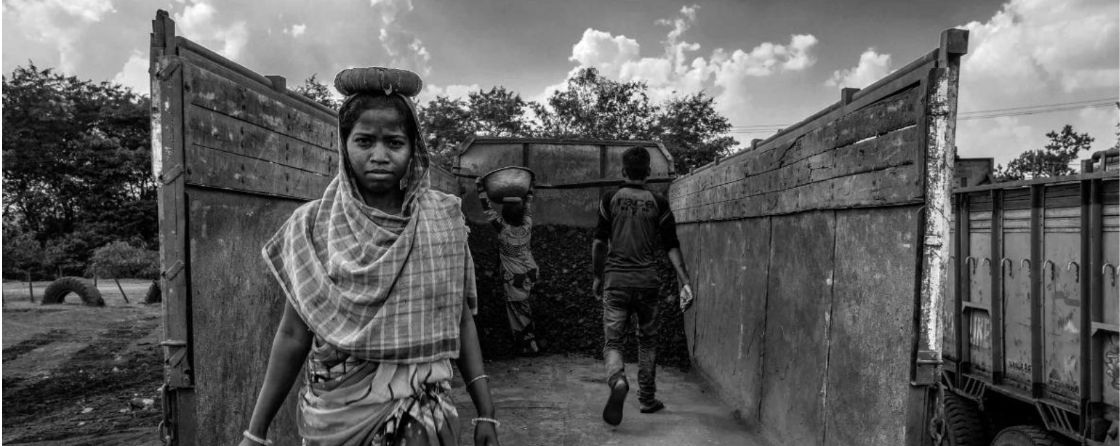
In coal mining districts, the nature of labour dependence on working coal may change over time, but generations will continue to rely on the industry for their livelihoods. This leaves coal communities extremely vulnerable to an energy transition.
India’s coal dependency is more complex than that of countries in the Global North. Amidst deliberations on coal phase-down and just transition planning and strategies post COP-26, the intricacies of this dependence make any phase-down a delicate and intense socio-economic and political process. Apart from the country’s reliance on coal for energy security, this dependency is also spread across economy, especially amongst coal communities.
Several studies have mapping coal reliance and its effects on states’ revenues, railway freights and fares, the economy of coal producing districts, as well as on industries such as transport, power, sponge iron, steel and bricks.
More importantly, accounting for the impact on livelihoods and jobs of coal communities are at the core of coal dependency discussions in the country. There are two approaches to examine coal labour in India. The first is to map direct, indirect and induced employment and the other is to study formal and informal labour in the coal ecosystems. However, these studies largely focus on the magnitude of labour dependency.
Understanding Policy Focus on Child Protection
First published in DCPCR’s Children First: Journal on Children’s Live; available here.
Union budget 2022-23, announced the renaming and restructuring of the Child Protection Scheme to ‘Mission Vatsalaya’ to address both child protection and child welfare. This piece critically looks at the extent to which the new guidelines are able to move towards a more holistic understanding of child protection and welfare and address shortcomings of the erstwhile CPS scheme.
We just gotta do meta! Notes on disciplinary anxieties in Geography in India
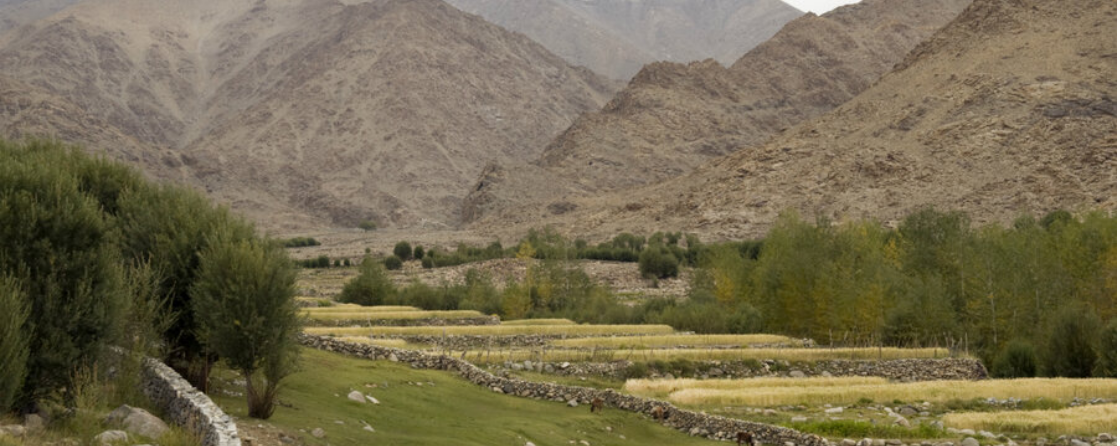
A hundred years since its inception in college curriculum in India, geography as a discipline appears to be marked by a lack of self confidence. The persistently unenthusiastic response of Indian departments of geography to the present global health crisis over the past year suggests that this is not a momentary loss of heart. We suggest that this is rather the result of the discipline’s intertwining with post independence development policy in addition to the failure to integrate the sub disciplines of geography well with each other. As a way forward, we argue that the greatest promise in fact lies not in the universities but in networks across departments and independent research centres where geography can truly claim its place in the sun as a discipline that offers the relational approach that few other disciplines offer.
Proximity and precarity in urban governance

GOVERNING a city is arguably more complex than rural governance – more objectives to balance, more instruments to wield, all in the context of a constantly mutating dynamic environment. By contrast, the rural seems simpler and more static. This is even more so in a country like India, which is going through an intense phase of transformation, as occupations move away from agrarian rhythms and clusters of villages transform into towns.
Yet, as we present in this piece, urban governance in India is significantly less capacitated in its ability to make a difference in the lives of citizens. We illustrate this by focusing on two key axes of difference with respect to rural governance – proximity and precarity.
Decentralization in limbo and decline

THE silver jubilee of the coming into effect of the 73rd Amendment was observed in April 2018. The official speeches, after their perfunctory obeisance to the idea of decentralization, were all about implementation of priorities set by higher level governments. However, in reality, nothing has changed; arguably, institutional mechanisms to promote true democratic decentralization have gotten worse. The devolution of flexible grants to the Panchayats has marginally improved on paper, but the actual use is hemmed in by a plethora of conditionalities. Programmes and schemes continue largely as before, implemented by parallel structures and their purpose-built user groups. In many states, Panchayat elections continue to be postponed indefinitely, as states find ways and means of disobeying the Supreme Court’s orders that the elections should not in any circumstances be delayed.
A consideration of these trends against the background of theoretical conjecture, clarifies how forces of centralization never really disappeared and indeed, gained strength over the years. The Balwant Rai Mehta Committee1 justified the need for decentralization based on the vast size of the country, the infinite variations that existed across it and the difficulties of communication and coordination faced. It suggested that elected bodies be established at the district and subdistrict levels to supervise and monitor community development programmes. The imperative for this suggestion was the need to foster more peoples’ participation in the nationally crafted community development programme.
Decentralization facilitated dominant caste entrenchments

AS Canada’s first Prime Minister Sir John A Macdonald put it, we need national government for national needs and local government for local needs, the importance of local government institutions is self-evident. In fact, the local bodies are more important insofar as people’s day-to-day lives are concerned than the state or national governments. However, this comment is a critique of the ‘elected’ village panchayats in India.
The point is not that local government through elections is inherently good or bad. Context matters. Geography matters. And the aims and design of these institutions matter. It is also ironic that many public-policy interventions require certain enabling conditions to succeed, however, once those enabling conditions are in place, there would not be any need for those policy interventions. For example, a relatively harmonious society and a bureaucracy that is accountable and efficient are the two conditions necessary for successful governance at any level. Most of the OECD (Organization for Economic Co-operation and Development) countries do possess these two conditions. For example, Of the 38 member-countries of OECD, which is a group of the developed nations, 36 countries are homogeneous, and each country has one language. They are also homogeneous in terms of their ethnicity and religion. In contrast, in countries such as India where social harmony and efficient bureaucracy are below par, the second-order solutions like local self-government will not only be ineffective but a distraction from tackling the real challenges, viz., promoting social harmony as well as efficiency in administration.
Panchayat secretary: the last-mile bureaucrat
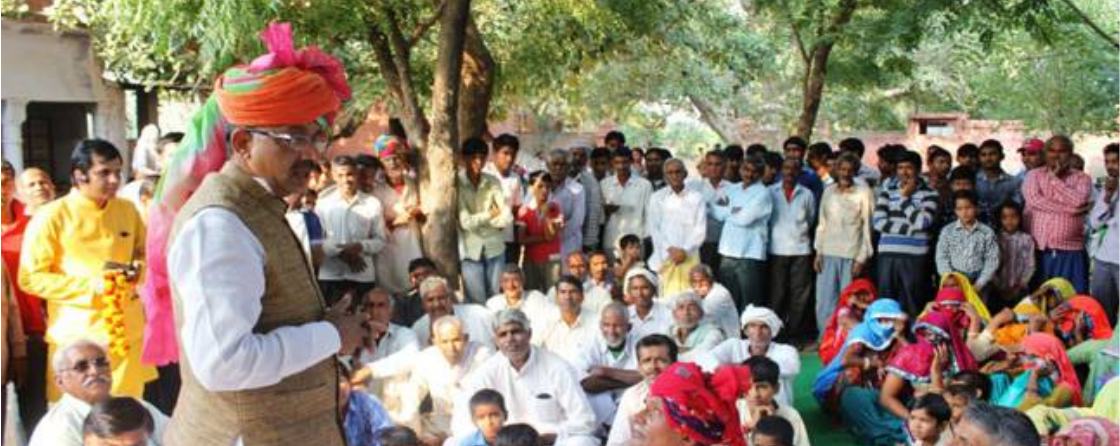
INDIA’S experiment with local governance in the last thirty years has seen a considerable body of scholarly research.1 However, the existing literature does not adequately engages with the role and responsibilities of government officials working as the last-mile bureaucracy. In this essay, we focus on one such village-level government functionary, namely, the Panchayat Secretary (hereafter, PS). The PS is the executive head of the panchayat secretariat and deals with a range of subjects devolved to gram panchayats (hereafter, GP) under the 73rd Amendment Act.2 It is important to note that local government is a state subject and thus the number of items devolved varies greatly across states. Similarly, some states in the recent years have massively increased their bureaucratic presence at the village panchayat and urban ward level.3
We collected information on panchayat secretaries from the Ministry of Panchayati Raj website in March-April 2021 that listed the name of secretary, panchayat name, block and district name, and last four digits of their official mobile number. This dataset helped us in creating a unique id for each PS, and our analysis revealed that while southern and eastern states had one PS per panchayat, the northern states had a lower ratio with one PS looking after many panchayats. We also collected information on population size of panchayats to test the average rural population size panchayat secretaries serve.4
We conducted fieldwork in three districts of Bihar in January 2022 to understand the role and responsibilities of panchayat secretaries, how they interact with citizens and elected representatives, and what challenges they face while discharging their duties. And to get a picture of variation across the states, we also conducted telephonic interview with more than two dozen panchayat secretaries across Uttar Pradesh, Maharashtra, Rajasthan, Madhya Pradesh, Chhattisgarh, Kerala and West Bengal. These interviews, along with our analyses of government notifications, reveal that the duties and responsibilities of the PS are largely similar across states and regions. Most PS lack proper training, are overburdened with multiple tasks, which get reflected in many functions that the state hopes to perform with ease – such as counting births and deaths, welfare delivery, among others.
The mission creep problem in panchayat finances

OVER the last year, several Sarpanches in Guntur district of Andhra Pradesh have been protesting against the failure of the state to release the 15th Finance Commission (FC) grants and other funds to them. Amongst other concerns is the inability of the panchayat to get even day-to-day civic maintenance works done in the village including drinking water supply and sanitation.1
The question of limited finances for panchayat is not a new phenomenon. Despite the promulgation of the 73rd Amendment to the Constitution wherein states were mandated (wholly or partly) to constitute three levels of panchayats in rural areas and assign funds, functions, and functionaries to them, even today the status of devolution for even basic civic functions remains weak. As per the latest publicly available data on the status of devolution and fiscal and functional assignments to panchayats by the Ministry of Panchayati Raj (MoPR), of the 29 functions to be devolved to rural local bodies (RLBs), only five states reported devolution of all 29.2 Even in terms of expenditure responsibility, local government in India account for only 3% of total expenditures; in countries like China and the United States it is 51% and 27% respectively.3
The acceptance of the recommendation of the 14th FC was said to be a game changer in strengthening fiscal decentralisation. As a major departure from previous commissions, the 14th FC provided an unprecedented Rs 2,87,436 crore over five years directly to local bodies. For Gram Panchayats alone, Rs 2,00,292.2 crore was recommended.4 To put this into perspective, the figure was three times the recommendations of the 13th FC, which had recommended Rs 87,519 crore. The yearly quantum of funds was fixed to ensure greater predictability of finances and safeguard against buoyancy of revenues collected.
Local Governance: Evaluating 30 years of the 73rd and 74th constitutional amendments- In Conversation

THIS conversation on democracy and decentralization between Yamini Aiyar, President and CEO of the Centre for Policy Research, and Mukulika Banerjee, Associate Professor in the Department of Anthropology at the London School of Economics, reflects on the past, present and future of India’s experiment with decentralization.
The conversation began with taking a stock of Indian democracy in relation to the promises of 73rd and 74th Constitutional Amendments. While India’s record on political decentralization has seen a fair bit of success, the record on financial and administrative aspects of decentralization has been rather poor. In the next segment, this conversation explored the inherent conceptual and design challenges that stemmed from structural and political factors such as caste and gender, as well as India’s weak state capacity. Finally, the discussion turned towards anticipating future challenges and whether they will differ from those encountered in the 1990s, and what can be done to make this project a success.