Local Governance: Evaluating 30 years of the 73rd and 74th constitutional amendments- The Problem

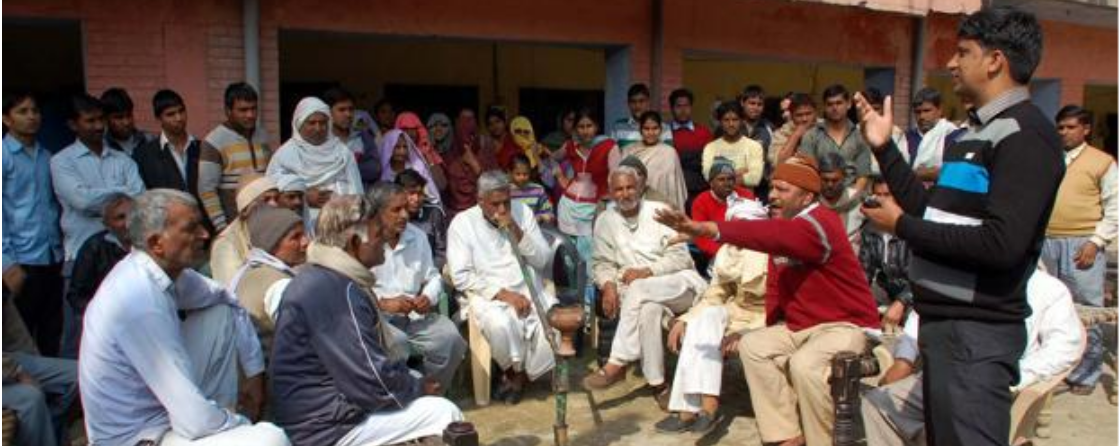
INDIA’S grand experiment with local governance began with the 73rd and 74th constitutional amendments in 1992. Since then, a lot of changes have taken place, including the opening of the economy, increase in social mobility, changes in the party system, rapid advancement in technology, among others. This issue of Seminar is an attempt to take a stock of this experiment 30 years later – what we have achieved and where we failed?

It is true that there have been efforts to give legal status to local self-governments across rural and urban India since independence, and the third-tier structure with radical promises is a product of the long conversation on the relationship between democracy and decentralization.

Solar Rooftop Systems and the Urban Transition: Shall the Twain Ever Meet? Interrogations from Rewari, India

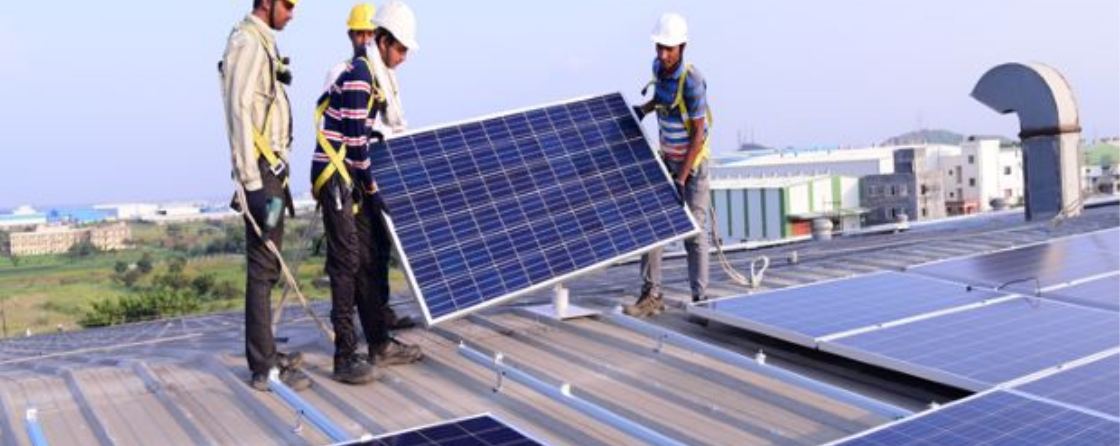
India is facing two major transitions. In 2040, its energy demand will double while 800 million Indians will live in cities by 2050. Situated at this intersection, this article contributes to the field of urban energy research by looking at Solar Rooftop Systems (SRS) in a district located in the extended periphery of Delhi. Using a multi-pronged qualitative methodology in a corridor made of villages and small towns, we argue that public policies are framed applying a rigid territorial grid opposing urban and rural, ignoring the motivations of both residential and professional users, which are not bounded by the rural/urban binary. This disjunction explains that renewable energy does not lead to a new imagination of urban and energy systems. These two fields remain disconnected while solar energy fuels consumption and the city expansion in its peripheries. Finally, the observed variegated urban energy landscapes (UEL) embody a land and energy intensive form of urban growth.

What Is Polluting Delhi’s Air? A Review from 1990 to 2022

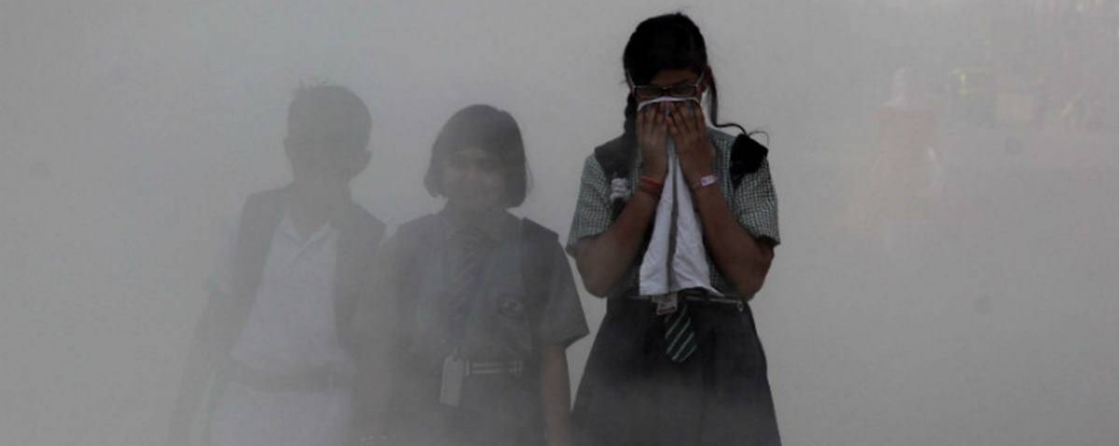
Delhi’s annual average PM2.5 concentration in 2021–22 was 100 μg/m3—20 times more than
the WHO guideline of 5 μg/m3. This is an improvement compared to the limited information available for the pre-CNG-conversion era (~30%), immediately before and after 2010 CWG (~28%), and the mid-2010s (~20%). These changes are a result of continuous technical and economic interventions interlaced with judicial engagement in various sectors. Still, Delhi is ranked the most polluted capital city in the world. Delhi’s air quality is a major social and political concern in India, often with questions regarding its severity and primary sources, and despite several studies on the topic, there is limited consensus on source contributions. This paper offers insight by reviewing the influence of Delhi’s urban growth since 1990 on pollution levels and sources and the evolution of technical, institutional, and legal measures to control emissions in the National Capital Region of Delhi.

The riddle of rationalisation

THIS past October, the Ministry of Railways ordered the closure of the Central Organisation for Modernisation of Workshops (COFMOW) effective 1 December 2022. The decision fell in line with the recommendation made by the Principal Economic Advisor, Ministry of Finance on ‘Rationalisation of Govern-ment Bodies’ and was duly approved by the Railway Board.

Established in 1979, COFMOW was set up to serve as a ‘centre of excellence’ for the procurement of modern and advanced machine tools, build ‘state of the art’ rolling stock maintenance, and modernise production units and workshops across the Indian Railways. In news coverage of COFMOW’s imminent closure, it was reported that over the decades, the organisation had built specialisation in procuring complex machines with the required institutional knowledge to determine prices and the technical soundness and compatibility of modern machinery.

According to some officials, COFMOW’s expertise in this area was such that other government entities often sought its inputs and support for their own procurement needs. The decision to shut it down, however, reflected a view that it was one among the myriad, acronymous government bodies that had now outlived their utility and could be safely dispensed with, shedding institutional flab.1

A similarly brief and confusing set of news reports had accompanied the instantaneous dissolution of the All India Handloom Board and the All India Handicrafts Board in July and August 2020, respectively. In the midst of the first wave of the Covid-19 pandemic and in the run up to National Handloom Day on 7 August, the orders appeared unexpected. But the Ministry of Textiles stated that the decision was part of a ‘systematic rationalisation of government bodies in consonance with Minimum Government, Maximum Governance.’

The reactions carried in the media varied. A lament at the loss, seven decades on, of the ‘only official forum, however watered down, where the voices and views of weavers and craftspeople could be expressed directly.’2 An appeal that the largely inert and dysfunctional status of the boards over time was cause for their revival rather than abolition. The view that given their ineffectiveness, their closure would have little to no consequence. And the rationale that their removal would in fact rid the system of excessive political patronage, interference, and intermediation, that the necessary work would be better done through field officers, while a ‘new portal’ for handlooms would now provide all relevant information regarding schemes and exhibitions.

Later that year, in December 2020, the Ministry of Information and Broadcasting decided to wind up four distinct state-funded film units – the Films Division, the National Film Archive of India, Children’s Film Society of India, and the Directorate of Film Festivals – and merge them with the state-owned, for-profit National Film Development Corporation (NFDC). The stated goals of the merger were ‘convergence of activities and resources and better coordination, thereby ensuring synergy and efficiency’ in meeting organisational mandates, while avoiding duplication. Yet, the decision generated deep unease. ‘As custodians of the national cinematic heritage,’ it was pointed out that each of the four film units performed ‘discrete and specialised functions, all in the public interest.’3

At stake is only the entire ‘archival history of this country on film’ and the highly specialised knowledge and skills its collection and preservation entails. Moreover, many filmmakers fear that the original public purpose held by each unique film unit is now at risk of being overwritten by the NFDC’s commercial imperatives and that the government would next move towards monetising the assets on which these autonomous public institutions had been built. In a twist that connects these recent exercises in rationalisation, the new head of the NFDC, now in charge of running all the merged public film units, is a 1999-batch officer of the Indian Railway Stores Services (IRSS).

What is a reasonable response to rationalisation? As someone with no particular expertise on the Indian railways, handloom, or film, I find that I am not in a position to offer a judgement on the diverse and specific decisions described above. Yet, as a citizen, and a student of the Indian state, I am troubled by the sense of ambivalence and anxiety I feel every time I come across news reports announcing such decisions. Casually alerted to the impending closure of government bodies that we never knew existed or know too little about, one can’t help but wonder whether this is more of a trivia quiz or a question of general knowledge in that drab and dreaded category: the life and times of the Indian state.

On the one hand, when it comes to the work of government, the rationalisation of public bodies is a necessary and continuous process, invariably sensitive but clearly important to take up from time to time. On the other hand, each instance seems to be entangled in conflicting narratives of profound institutional purpose and dire institutional perversity, leaving one confused about the right course of reform action.

More generally, given the multiple, competing interests that are at play in such long, contextual and idiosyncratic institutional and organisational histories, all acts of public sector rationalisation, even the relatively transparent ones, seem to carry an air of the insidious about them. But, underlying all of this, the real source of anxiety, when it strikes you, is the realisation that one knows so little about what it is that all these government bodies actually do. Even worse, there’s a sinking suspicion that one is not alone in our ignorance, and yet that there is no real impetus to pay closer attention to what is being done – and undone – in the meanwhile.

In the United States of America, in recent times, it seems to have taken a presidential streak of wilful ignorance and reckless indifference to bring to the surface of public consciousness a modicum of recognition of the routine work of government agencies and employees, and why it matters. In his book The Fifth Risk, Michael Lewis demonstrates this vividly by talking to the public administrators who had prepared carefully and copiously for a presidential transition that the Trump team decided it didn’t really need to show up for. This was, if one can even use the term, ‘rationalisation’ by sheer disdain, followed by numerous attempts to swing a sledgehammer across the U.S. administrative state.

In response to this ‘Trumpian impulse – the desire not to know,’ Lewis dives into three US government departments that he thought would be among the least interesting: Energy, Agriculture, and the curiously named Department of Commerce (forbidden by law from engaging in business, but housing, among various entities, the US Census, the Patent and Trademark Office, the National Institute of Standards and Technology, and the National Oceanic and Atmospheric Administration, NOAA, which contains a massive trove of wildly useful weather data.)

As he unpacks acronym after acronym, one gets a whirlwind tour of what these obscure yet vital government bodies and the human beings working inside them actually do, especially when it comes to risks that no one else is alive to, lives and livelihoods that don’t figure on anyone else’s agendas or business plans, or research and experimentation that is yet to prove its value. This is government work that had long remained invisible. It is also the sort of thing that was often consciously unacknowledged by politicians and businessmen who didn’t want it to be known that they relied on federal government assistance to pull off their entrepreneurial feats. Now, under Trump, much of this was viewed as entirely dispensable.

Take Art Allen, of the book’s afterword, for instance, one of the lone oceanographers in the US Coast Guard Office of Search and Rescue, who spent long years studying the ‘drift’ of scores of objects so that better searches may be designed more quickly to locate those lost at sea. His treatise on the subject, Review of Leeway, became an essential resource for coast guards in training, and his innovations in air-sea rescue have saved countless lives in the US and in other countries around the world. Yet, along with tens of thousands of government employees, Art was not only classified an inessential worker during the government shutdown in 2018, there were also no signs of the appointment of his successor when he eventually retired.

For Lewis, then, the ‘fifth risk’ stands for those less detectable, systemic risks: precisely the risks we find it hardest to imagine, not the one’s that we see most clearly and fear most commonly. ‘It is the innovation that never occurs, and the knowledge that is never created, because you have ceased to lay the groundwork for it. It is what you never learned that might have saved you.’4

Another term that illuminates the routine, socio-technical, systemic work of complex public organisations is Dead Reckoning, the title of an extraordinary sociological history of air traffic control in the United States by the sociologist Diane Vaughan. ‘Dead reckoning is about foresight: predicting the position of objects in space and time by deduction, without benefit of direct observation or direct evidence.’5

It is the interpretative, navigational work that air traffic controllers who are part of the Federal Aviation Administration (FAA) do every day and is a result of the shared ways of thinking, being and doing that enables them to coordinate effectively, interacting with co-workers and technological devices in the same room and across physical and social space. This is what made it possible for air traffic controllers located in 650 facilities across the country to clear the skies of over 4000 airplanes in a little over two hours in the immediate aftermath of the unprecedented events on the morning of 11 September 2001.

However, as Vaughan, who has studied the life course of the system of air traffic control over time observes, by 2017 ‘the importance of this cultural system of knowledge to the work of controllers was confirmed by its absence.’ At that time, as a result of the shut down of the FAA Academy, the streamlining of hiring and expedited training, and the assignment of inexperienced personnel to complex airspaces, the new controllers ‘could learn the skills, but they struggled to acquire the necessary level of expertise.’

Yet, as she also observes, thanks to the visible efforts of supervisors, support staff, trainers and senior controllers to compensate for the losses and continue to pass knowledge on, the air traffic control system was still able to maintain its ‘resilience, reliability, and redundancy,’ improvising tools of repair following periods of damage and decline. In doing so, the system demonstrated its persistence, and maintains, for now, air traffic control’s impressive safety record for commercial aviation.

‘We can think of all organisational systems as engaged in dead reckoning’, Vaughan suggests, ‘preoccupied with anticipating their own future position in social space and time in relation to other organisations by deduction, without benefit of direct observation or direct evidence.’6 Complex organisational systems are in a constant state of movement, shaped and driven by temporal concerns – of history, the present and the future – and react and respond to the actions and movements of others in a dynamic organisational field. Among these forces, organisations will inevitably have to react to the external pressures of rationalisation as they compete for scarce resources and establish and reestablish their legitimacy against a normative set of expectations of achievement.

These expectations also change over time as hard-won political and social consensuses shift and are renegotiated. Some public organisations find greater cover, while others face greater exposure to harsh conditions. But, like Art Allen’s objects, organisations also drift from their purpose in different ways and at different speeds, and some may also be better prepared to strategise and fight for survival for longer than others, before they come to the point of sinking. Against the impulse to rationalise, do we instead need better designed search and rescues for public organisations cast out, overboard, and adrift at sea. And when do you give them up for lost?

To return to the closure of COFMOW in light of the ‘fifth risk’, is this a case where the organisation has served its purpose, where the task of modernisation of railway production units and workshops is now complete, and technical proficiencies in procuring advanced machinery and rolling stock maintenance welldistributed within the railways administration such that a specialist body is now no longer required? Or are we at risk of losing knowledge and expertise, built over decades, in complex technology assessment for railways operating in our conditions and meeting our requirements? Are we, to quote Lewis, without recognising it, ‘ceasing to lay the groundwork’ that is needed to, quite literally, keep the trains running on time, and safely now and in the future?

Similar questions about specialist functions and technical capacity are also raised in the case of the public film units and the collection and preservation of cinematic archives and cinematic heritage. Moreover, although trains and films may seem easy to contrast, for India, both are powerful examples of the long and emotive histories of public institutions and nation-building. Acts of public sector rationalisation are never bereft of ideology and therefore rationalisation based on narrow conceptions of public utility and value, or determinations of the role of the state based on market failure, are, at best, appropriately applied to think about a limited range of state work, and even there fail to account fully for social and political considerations that people and politicians, take seriously.

Handicrafts and handloom, of course, are also deeply interwoven into the institutional life and work of nationbuilding, and of state, science, technology and economy. But the debate on the status and functioning of the All India Handloom Board is perhaps a good illustration of the many, early post-independence institutional experiments, established with ideals of democracy and deliberation and a faith, though not without fear, of a catalytic and enabling role for the Indian state in building up economy and society through community development, local industry and welfare.

It has been argued that the imagination of institutions at the time was less heavy-handed and more facilitative than one gives it credit for, especially given the long and sordid legacy of licensing and state controls that followed.7 But whatever the case, in most instances, one simply cannot defend their institutional pasts at the hands of political and intellectual elites, old and new, who severely compromised their functioning over time. It seems bitterly ironic that public institutions that were consciously built to undo colonial modes of governance and dominance so routinely turned into the institutional grounds for pretty political and administrative empire building within the Indian state at all levels.

Even so, will their closure relocate and revive spaces for representation and deliberation elsewhere, or will the arguments against political interference and patronage leave us with animated virtual portals but with no actual voice recognition capacities or real platforms for the expression of diverse and shared interests, especially in sectors composed of the largely informal and small scale?

Without defending the status quo, we must also understand how many of our deeply defunct and dysfunctional organisations are in this condition due to the overbearing presence of the state or have in fact remained ineffective and locally entrenched precisely because of the state’s premature absence.

In this regard, in reading the recent literature and debates about state capacity and public administration in the U.S. and in India, one is immediately struck both by the common effort at myth busting, but the exactly opposite direction that this takes in trying to fight for the state and for building state capacity. For a country famous for its deep, almost foundational aversion to government, it always comes as something of a surprise to see how much government the U.S. has actually built up and how much has managed to persist, despite repeated efforts at erosion and dismantlement.

As the comedian Adam Conover points out at the start of his new Netflix show, tellingly titled the ‘G word’, Americans may love to hate government, but one in 16 American workers is employed by the federal government – and altogether governments in the U.S. employ approximately 16 per cent of all Americans with jobs. In contrast, based on published data, that figure – the share of government employment to total employment – is only 4.6 per cent in India8, although the state remains by far the largest formal sector employer, and the dream, and overwhelmingly unsuccessful pursuit of the government job continue to consume millions of youthful years across the country.

Against the myth of the bloated Indian bureaucracy, it is actually the remarkable ‘thinness’ of the state at all levels that we need to acknowledge, especially where it is urgently needed for both better, more substantive policymaking and deeper, more responsive service delivery. In this context, we have a long record of rationalisation by neglect and via vacancies, which now makes right-sizing a deeply complex technical, fiscal, administrative, political and social problem.

Finally, if the myth about the numerical strength of the bureaucracy is about being thin and understaffed, rather than bloated and idle, within institutions and organisations of the Indian state, there is a serious problem of having slowly hollowed out technical knowledge and skill, rather than deepening and expanding it. More than the numbers, it is here in the loss of public institutions and ecosystems of knowledge and innovation across sectors and fields that we are most likely ‘to never learn what might have eventually saved us.’

In closing, perhaps independent yet credibly embedded and rigorous institutional and organisational histories and ethnographies, of which we have all too few, may just have a greater role to play than we may think, both for governments and for citizens. Done well, they might just about adequately capture and convey the depth of institutional work that has been done and undone, lost and recovered, over the life course of these vital and mundane public organisations, shaped by myriad external forces, relationships and interactions, and rife with contingency.

In their existence, these somewhat tedious and idiosyncratically detailed studies may serve in time as acts of institutional witnessing, of unusual value especially when organisational memories fray and when new reforms and exercises in rationalisation might be ready to learn from past experiences of failure and of success. For the public, they are contributions to a library, archive, and record of the work of government that we should have paid some attention to and must know something more about going forward. At a time when the deepest problems of governance seem to arise from failure of public imagination, who knows?: the antidote might just lie in delving a little deeper into the surprisingly invigorating inner life of government, where we can be sure that fact is almost always stranger than fiction.

Footnotes:

1. Avishek Dastidar, “‘Outlived Utility’: 4-Decade-Old Railways Unit Specialising in Procurement to Down Shutters’, The Indian Express, 19 October 2022, https://indianexpress.com/article/india/outlived-utility-4-decade-old-railways-unit-special
ising-in-procurement-to-down-shutters-8217048/

2. Divya A, ‘What Does the Dissolution of the All India Handloom Board Mean for the Industry?’ The Indian Express, 8 August 2020, https://indianexpress.com/article/lifestyle/art-and-culture/what-does-the-dissolution-of-the-all-india-handloom-board-mean-for-the-
industry-ministry-of-textiles-6545819/

3. Sudipto Sarkar, ‘Saving India’s History: Archive Merger Poses Numerous Problems’, Documentary Magazine, 18 August 2022, https://www.documentary.org/feature/saving-indias-history-archive-merger-poses-numerous-problems

4. Michael Lewis, The Fifth Risk. Penguin Books, UK, 2019, p. 76.

5. Diane Vaughan, Dead Reckoning: Air Traffic Control, System Effects, and Risk. The University of Chicago Press, Chicago, p. 3. My thanks to Gokulnath Govindan for sharing this book with me and for numerous references and insights on public institutions and public workers more generally.

6. Ibid., p. 567

7. See, for instance, Taylor C. Sherman, Nehru’s India: A History in Seven Myths. Princeton University Press, Princeton, 2022.

8. T.V. Somanathan and Gulzar Natarajan, State Capability in India. Oxford University Press, Oxford, 2022, pp. 97-98.

Citizen vs labharthi? Interrogating the welfare state

IN July 2022, Prime Minister Narendra Modi set the cat amongst the pigeons while referring to a new ‘revadi culture’ (welfare and subsidy announcements) in India’s electoral politics. He warned young voters to be wary of the ‘dangerous new trend of trying to buy the people by distributing freebies to them.’ On the surface, these remarks were a thinly disguised political attack seeking to delegitimize welfare announcements by political opponents ahead of the crucial Gujarat elections. But beyond the immediate electoral moment, the positioning of the attack and the choice of words used to describe ‘welfare’ harked back to the language deployed by candidate Modi back in 2014.

With slogans like ‘Maximum Government, Minimum Governance’ and the ‘Gujarat model’ (of big business, infrastructure and market reforms), candidate Modi had positioned himself as a centre-right, free-market oriented reformer, in contrast to what commentators of the time called ‘povertarianism’ of the previous regime. Welfare was relegated to the background, mere ‘revadis’ against the promise of the possibility of economic reforms.

But the real world of elections creates its own irresistible logic. Two election losses later by 2017, the centre-right candidate Modi had refashioned himself as the ‘vikas purush’ with welfare schemes at the heart of the BJPs electoral push. Since 2017 a slew of new and repackaged pre-existing welfare schemes were announced with gusto – from cooking gas to housing, health insurance and extended free ration under the Covid relief package – these schemes are closely associated with the prime minister himself. Voter surveys show that the BJP actively draws on these schemes for political legitimacy during election campaigns and access to scheme benefits plays a role in shaping voter choices. The term ‘labharthi’ (beneficiary) has now entered the political lexicon and is regularly deployed as an analytical lens to interpret election outcomes. In fact, if election rhetoric is an indicator, the BJPs ideological frame is best described as right wing, cultural majoritarianism mixed with welfare populism.

Given the centrality of welfare in the BJP’s electoral discourse, it is important to ask if there is a distinct BJP welfare model. If so, how do the two different narratives on welfare – the ‘revadi’ and the ‘labharthi’ – reconcile to shape this model? Crucially, what are its implications for the character of the welfare state, the role it plays in enabling citizen rights and claim making and more broadly the dynamics of citizen-state relations?

First a few important caveats. Any analysis of the contemporary welfare state has to acknowledge critical data gaps. The appropriate starting point for analysing the welfare model is through data on its scale and impact. However, there is no rigorous national-level data that enables comprehensive analysis. Critical statistics like the consumption expenditure survey and the census were last collected and placed in the public domain in 2011-12.

At an aggregate level, data from two rounds of the National Family Health Survey (NHFS 4 – 2015-16 and NFHS 5 – 2019-20) we can discern some trends.1 These data point to an increased pace of access to physical assets provided under the welfare schemes prioritized by the BJP, between the two rounds. For instance, the percentage of house-holds that reported using clean cooking fuel increased from 43.8% in NFHS-4 to 58.6% in NFHS-5. Access to sanitation facilities increased from 48.5% in NFHS-4 to 70.2% in NFHS-5. Women’s access to bank accounts too has improved from 53% in NHFS-4 to 78.6% in NFHS-5.

These achievements are significant. However, it is difficult to compare their effectiveness (scale, reach and outcomes) to the welfare measures of the previous regime because priorities were different. For instance, the United Progressive Alliance prioritized MGNREGA, school infrastructure under the Right to Education and health infrastructure under the National Health Mission and therefore the appropriate comparison would be between the progress of these fronts under the BJP. However, neither scheme has been given significant priority in the current welfare regime. Further, absent rigorous evaluations of scheme outcomes, it is difficult to make any claims in terms of overall welfare outcomes and the impact of these schemes on poverty and wellbeing.

It is important to note that the Public Distribution System (PDS) and the Pradhan Mantri Jan Dhan Yojana (PMJDY, the financial inclusion scheme which began as a pilot in 2013 and was scaled up under the BJP government) are perhaps two priority areas that overlap between the two regimes. Here there has undoubtedly been significant progress in terms of scale and reach in recent years. This is especially true of the PDS, which after the passage of the National Food Security Act in 2013 began a slow scale-up and acquired a near-universal character during the Covid crisis.

Given these caveats, this analysis of the contemporary welfare regime, as it has unfolded in the last five years (2017 onward), will focus not on its impact but on the nature of its politics and its underlying vision of state-society relations.

The most visible aspect of the BJP’s welfare is its emphasis on direct benefits to individuals. Technology has been effectively deployed to create a governance architecture for Direct Benefit Transfers (DBT) which has been used to drive both cash and inkind transfers to individual households. Cash transfers, subsidies for housing, health insurance, toilets, and drinking water and free ration (since the pandemic) are all hallmarks of the BJP’s welfare, visible both in overall budgetary allocations and implementation priority. Between 2015 and 2020-21, the total number of individuals receiving DBT (cash and in kind) increased by 46%. Economist Arvind Subramaniam characterizes this approach as ‘new welfarism’. Welfare that prioritizes the subsidized public provisioning of private goods over public goods.2 This is visible in the fact that government expenditure on health and education as a percentage of GDP has stagnated and indeed marginally reduced between 2014-2020.3

From the perspective of electoral politics, this preference for private goods has to be understood through the prism of the emergent mode of political branding and the very unique role that welfare schemes play in shaping this. Under Prime Minister Modi, the BJP has sought to manufacture political power through a carefully crafted, direct connection between the party leadership (the prime minister himself) and the voter. This connection is nurtured through the deification of the leadership by projecting the leader as the sole patron and provider thus enabling the leadership to consolidate power without having to bargain with local leaders and factions.

Welfare schemes that provide private benefits that are visible, and tangible, in other words, new welfarism, allow for this connection to be built. It is common during election campaigns to hear voters directly attribute welfare benefits received to the prime minister himself. Voter surveys by CSDS-Lokniti bear this out. Voter attribution of schemes directly to the prime minister and the central government was far greater in the 2019 general elections than in previous elections where voters often credited state governments’ for the implementation of national schemes.4 The link between welfare schemes associated with the BJP and voter preferences is visible in data emerging from recent state elections. The CSDS-Lokniti surveys in the 2022 Gujarat, for instance, showed a greater likelihood of those receiving benefits in schemes like free ration, the PM-Kisan (cash transfers for small farmers) and housing schemes, voting for the BJP. A similar trend can be discerned from the 2022 Uttar Pradesh elections.

This direct connection and voter attribution are manufactured through a sophisticated communication machinery designed to build and sustain the political brand of the leadership. Studies of the BJP’s electoral and communication machinery have pointed to the party’s near complete control of the media, and deep organizational strength that in turn has enabled the near deification of the leader. What is less understood is the role that welfare schemes play in this mode of political branding.

Welfare designed as private, visible, tangible benefits rather than diffused public goods like roads, schools and health care is far more amenable to direct attribution. Tangible benefits make it easier for party workers to mobilize voters and invoke the prime minister as the provider. Moreover, they are more amenable to implementation through a centralized machinery that can effectively cut out intermediaries (state governments, panchayats, and local political actors). This creates the context for forging a personalized, emotive connect with the voter, with welfare as the means to generate legitimacy. A close look at the deployment of welfare schemes offers glimpses into how this strategy has been crafted.

For one, all flagship schemes old and new have been renamed to introduce the suffix of prime minister, before the name of the scheme. A reminder to the ‘beneficiary’ of welfare schemes that it is the prime minister who is the provider of the scheme. When benefits are delivered, the prime ministers’ photograph is a visible feature. Readers may recall a recent controversy between Finance Minister, Nirmala Sitharaman and leaders of the Telegu Desam Party on a visit to Telangana when she publicly reprimanded a district collector in Telangana for the absence of banners with the prime minister’s photograph on display at the fair price shop. She went on to rebuke him for his failure to acknowledge the financial contribution of the ‘central’ government. Ration, the argument went, is available because of central government largesse, a fact that ought to be made clear to the beneficiary, through the photograph.

This incident is emblematic of the underlying tools through which this personalized politics of welfare is implemented – the photograph is the critical link to establish an emotive connection with the voter. ‘Unka (Modi) photo har jageh hai’ (his photograph is everywhere) said a female voter to my colleagues and I, in eastern Uttar Pradesh (UP) before the March 2022 election. Through the photograph, voters are reminded that he is the leader, the provider, the patron, the saviour. On the ground, party workers are deployed to remind voters of the largesse offered by the leadership with slogans like ‘Modi hai to Mumkin hai’ (all is possible). In UP, we encountered several voters who received reminders from party workers to collect their ‘free ration’, an offering from the leadership. In return, loyalty and trust are demanded of the voter. This is what Neelanjan Sircar has described as the ‘politics of vishwas’.5

It is important to point out that this is not unique to the current political moment, Jayalalithaa and Indira Gandhi before her, perfected this model of politics into an art form. What is distinct about this moment, however, is the coupling of the extraordinary communication machine, facilitated by technology with welfare politics that manufactures this deification and the pan national character. Regional parties, across the country, have adopted similar welfare politics and successfully sought to undercut the BJP. In Bengal, for instance, Mamata Banerjee used a combination of gender-based appeals and welfare delivery to prevent Hindu-Muslim consolidation from becoming a deciding factor in the election. According to CSDS data, more than 50% of lower middle class and poor women supported Mamata’s Trinamool Congress.

Underpinning the BJP’s careful deployment of welfare as an electoral strategy is a larger vision of state-society relations which is shaping a distinct idea of citizenship and the role of welfare within it. It is in this vision that we can identify how the two narratives of ‘revadi’ and ‘labharthi’ are reconciled to forge the distinctive BJP approach to welfare.

From its early days in power, the BJP actively sought to create a distinct identity for its welfare approach by seeking to present it as ‘empowerment’ in opposition to what they characterized as the ‘entitlement’ approach to welfare (the rights approach of the Congress-led UPA). Although never clearly articulated, glimpses of this vision can be found in speeches and political rhetoric of the BJP leadership. ‘The poor need to be empowered… to fight poverty on their strength and free themselves of poverty’ the prime minister argued in an early speech in 2015 as he
sought to distinguish the BJP’s ‘empowerment’ approach to welfare. In these early years co-contributory social insurance schemes (not unlike the welfare structure of the United States) were projected as the founda-tions of empowerment welfare that would serve to ‘enhance the purchasing power of the poor.’

Over time, the social insurance approach gave way to ‘new welfarism’ with a very distinct understanding of citizenship and empowerment. This found expression in a recent interview by Home Minister, Amit Shah, in the run-up to the UP elections. ‘We have provided gas connection, power connections and it is up to them to pay their bills… we have made toilets… it is up to them to maintain them… what we did was to upgrade their lives – this is empowerment.’

Underlying this idea of empowerment is a distinct notion of citizen duty and its relationship with the state’s welfare responsibility. Empowerment is imagined as an interplay between the state’s responsibility to provide better infrastructure and ‘ease of living’, while it is the citizens’ duty to leverage this ‘ease’ and pursue their welfare and collective well-being.6 ‘It is the job of the government to make efforts to provide 24 hours electricity’, the PM said in his Independence Day speech in August 2022, ‘but it is the duty of the citizen to save as many units as he can. It is the responsibility… of the government to supply water to every field, but a voice should come from each of my fields that we will move forward by saving water.’

In this framing of welfare and duty, the idea of welfare as a moral responsibility of the state to rights-bearing citizens’ is underplayed. The citizen-state relationship is constructed as a transactional act rather than one constructed through a set of mutual obligations of rights and duties. I give you ‘x’, and you do ‘y’ is how welfare is articulated, and thus accountability is shifted to from the state to the citizen’s shoulders. Empowerment is not defined as rights and identity assertion, but rather as a set of tangible assets for citizens’ to leverage. Welfare in this framing is about the state providing tools to fight poverty through new welfarism but the fight is an individual one, fought through the logic of markets. In essence this is a fundamentally neoliberal framing of welfare that reconciles well with the free-market oriented, ‘revadi’ worldview articulated by the prime minister.

This reframing of the citizen-state relationship makes possible the recasting of the citizen as a ‘labharthi’ rather than a rights bearing claimant of welfare. In this formulation, the citizen is cast as a passive recipient, a beneficiary of welfare, beholden to the benevolence of the state rather than an active citizen claiming rights. This harks back to the ‘mai baap Sarkar’, of yore but what distinguishes it is that it is seen as a clear transaction between the labharthi and the state for electoral gain. Hilal Ahmed characterizes citizen-state relations in this new frame as the ‘charitable state’ in which welfare is provided not out of political duty but as a transactional act of benevolence in return for votes.7

By stripping welfare of the language of rights the BJP has effectively created a new language of political mobilization. The ‘labharthi Varg’ allows party leaders to transcend the traditional logic of social mobilisation – caste, class, ethnicity – an appeal to the ‘labharthi’. This builds on slogans of ‘sabka saath, sabka vikas’ as a means to effectively shift the grammar of development and empowerment away from identity assertion through a group rights and a language of dignity to empowerment as access to scheme ‘benefits’. Embedded in this is a shift away from the idea of right based welfare to welfare as benevolence of the leader to the loyal voter.

Students of India’s welfare state have routinely characterized the Indian welfare state in the framework of patron-client relationships. These frameworks are invoked to understand the dynamics of rent-extraction, identity based patronage and clientelism as explanations for the historic failures of the Indian state to deliver welfare goods to all citizens.

I would argue that none of these effectively describes the BJPs welfare model and the shift it under-pins from the citizen to the ‘labharthi’. This is welfare based on loyalty, benevolence and above all the persona of the party leadership. It is best described as ‘patrimonial welfarism’.8 Welfarism that derives its power from the party leadership, while at the same time, leveraging benefits as an instrument to establish the leadership’s moral legitimacy with voters. This is the new welfare state of the 21st century. Its implications on democracy and the nature of citizenship are profound and merit deeper interrogation.

Footnotes:

1. National Family Health Survey (2014-15, 2019-21). http://rchiips.org/nfhs/

2. A. Anand, V. Dimple & A. Subramanian, ‘New Welfarism of Modi Govt Represents Distinctive Approach to Redistribution and Inclusion’, The Indian Express, 22 December 2020, https://indianexpress.com/article/opinion/columns/national-family-health-survey-new-welfarism-of-indias-right-7114104/

3. Government of India, Economic Survey, Ministry of Finance, January 2022, https://www.indiabudget.gov.in/economicsurvey/

4. Rajeshwari Deshpande, Louise Tillin, and K.K. Kailash. ‘The BJP’s Welfare Schemes: Did They Make a Difference in the 2019 Elections?’ Studies in Indian Politics 7(2), November 2019, pp. 219–233.

5. N. Sircar, ‘The Politics of Vishwas: Political Mobilization in the 2019 National Election’, Contemporary South Asia, 2020, https://doi.org/10.1080/09584935.2020.1765988

6. I am grateful to my colleagues Priyadarshini Singh and Mekhala Krishnamurthy for this insight.

7. H. Ahmed, ‘BJP’s Electoral Victories Are a Result of a New Kind of Welfarism’, The Indian Express, 14 March 2022, https://indianexpress.com/article/opinion/columns/bjps-electoral-victories-are-a-result-of-a-new-kind-of-welfarism-uttar-pradesh-7818327/

8. I owe thanks to sociologist Patrick Heller for this characterization.

Coal extraction, dispossession and the ‘classes of labour’ in coalfields of eastern India

Drawing upon long term fieldwork conducted in the coalfields of eastern India, the paper argues for the formation of multiple, fragmented and hierarchical ‘classes of labour’ in the ‘new public sector’ coal mines of India. Employing an intersectional lens, it shows that the organisation of ‘classes of labour’ is greatly dependent upon the differentiated negotiating powers for compensatory employments linked to pre-existing land and other social relations shaping up as ‘politics of incorporation’ in mining jobs. It demonstrates the exacerbation of socio-economic inequalities between Dalits, women and dominant caste and class communities in the dispossession process of open-cast coal mining.

How China outmanoeuvred the Modi government and seized control of territory along the LAC

For the first time in forty-five years, on 15 June 2020, India and China recorded the death of Indian soldiers on the Line of Actual Control— the contested border between the two countries, which stretches from the Karakoram Pass in the west to Myanmar in the east. The deaths occurred in the Galwan Valley, in Ladakh, and these were the first military casualties in the territory since the 1962 Sino-India War. The full details of the incident are shrouded in ambiguity, but it involved Chinese soldiers pitching tents around the Galwan Valley and their forceful eviction by the Indian Army— there is little clarity on whether China’s People’s Liberation Army had agreed to abandon these positions. This led to a clash which claimed the lives of 20 Indian soldiers and at least four PLA soldiers. More than seventy Indian soldiers were injured while nearly a hundred more, including some officers, were taken captive by the Chinese. No Chinese soldier was in Indian captivity. “We were taken by surprise by how well prepared they were for the clash,” a top officer at the army headquarters in New Delhi, who was part of the decision-making in the Ladakh crisis, told me.

A ‘Mainstreaming’ Approach to Uplifting Migrant Households

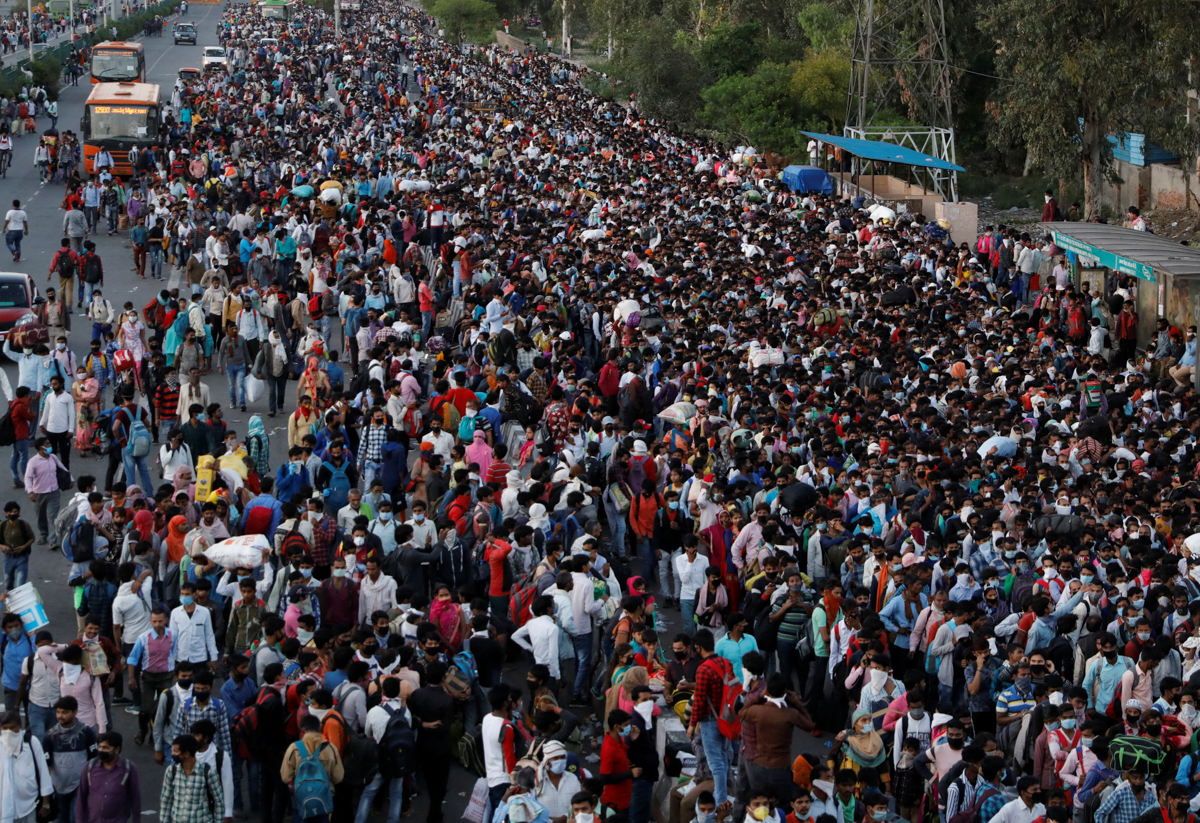
The Covid 19 migrant crisis could be seen as a watershed moment for policy in the realm of internal migration. Despite the lack of an omnibus migration policy, several disparate policy initiatives emerged at multiple levels of government, across various sectors leveraging multi-stakeholder collaborations. To stitch these responses together into a more coherent inclusionary policy framework for migrants, policy actors need to recognise the importance of migrants and their agency on the one hand, while seeking to redress their vulnerabilities. Based on a brief analysis of policy responses to the migrant crisis in India, this paper suggests that migration policy in India has already taken the initial steps towards adopting a ‘mainstreaming’ approach. Taking this momentum further through an enhanced understanding of migration processes, reflexive policy design, an iterative approach towards intervention and a systematic embedding of migration into mainstream policies, institutions and structures, India can contribute significantly towards fulfilling the SDGs and the ‘Leave No One Behind’ agenda.

Farm Laws versus Field Realities: Understanding India’s Agricultural Markets by Shoumitro Chatterjee, Mekhala Krishnamurthy

This paper evaluates the actual state of agricultural markets and existing agricultural market
regulation in India. It contrasts this with the design of the new “farm laws,” and argues that
those reforms may be misdirected in many respects. The paper makes a case for better
understanding of intermediation, the need for several kinds of public investment, improvements
in production conditions in agriculture, and attention to the broader economic context within
which agricultural marketing reforms occur.

Agro-food Systems and Public Policy for Food and Agricultural Markets

This transcription of a presentation, commentary and a discussion at IIM Banglore in 2020 has three parts. In Part 1, contested definitions of food, urgent food questions and concepts of food systems are clarified before considering the ways agricultural markets are integrated in food systems, the contradictory principles at work in policies for their regulation, and the ways such policy practices are imagined. Sixteen multidisciplinary depictions of global food systems, agricultural markets and food policies are analysed, concluding that their conceptual fracturing results from a disregard of theory. New models of the Indian food system will need to give rigorous attention to institutions for policy.

Part 2 problematises the empirical granularity needed to understand market behaviour that policymakers ignore as they shift agriculture from being the driver of industrialisation to being a residualised welfare sector. By continuing to ignore and misunderstand existing physical markets, regulatory reforms like the new central laws assume that the deregulation would somehow automatically bypass the vast number of private intermediaries necessary for distribution whose relatively easy-to-enter, small-scale activity undercuts the transaction costs of corporate agribusiness. In doing so, they lose sight of the original purpose and need for public regulation in primary agricultural markets in the first place.

Part 3 discusses the need for consultative policy processes for policy and the implications for small scales and informality in agriculture and its markets of the close integration of self-employment in the rural non-farm economy.