




Antimicrobial resistance (AMR) represents a global public health challenge. It has been examined through various angles, but the link between AMR and access to Water, Sanitation and Hygiene (WASH) or lack thereof has received little attention. Both AMR and WASH relate directly to the realization of the rights to health, water, and sanitation. In addition, both can affect the enjoyment of the right to environment. AMR is particularly complex from a rights perspective. Access to medicines contributes significantly to the realization of the right to health. At the same time, AMR affects the poorer sections of society who have disproportionately less access to medicines and to WASH. Rights, equality and justice should thus be at the centre of the development and implementation of law and policy concerning AMR and WASH. As we celebrate 50 years of international environmental law, it is crucial to ask some hard questions concerning the inter-sectional and cross-sectoral dimensions of AMR and WASH from the point of view of rights, equality, and justice. Linking the two would bring various co-benefits that the prevailing silo mentality has prevented.
Archives: Journal Articles
Governing Water to Foster Equity and Conservation
The water sector in India and vested interests in it have always been averse to change. We have now reached a point where diffi cult decisions must be taken if we are to avoid an increasing number of water-related confl icts. The states must not only adopt legislation based on the central government’s groundwater model law but also make sure to adapt it to their local circumstances. The union government also has a framework legislation that attempts to highlight the importance of water, which all states would do well to replicate.
Confronting inequality beyond sustainable development: The case for eco-human rights and differentiation

The development model emphasizing economic growth has been at the root of today’s environmental crises. Its reshaping as ‘sustainable’ development was supposed to address its shortcomings while giving particular attention to the needs of the poor. This has largely failed and in the process inequalities have increased significantly. Inequalities between people need to be addressed through eco-human rights that are collective and multi-level to better reflect today’s environmental challenges. These rights build on the idea of solidarity rights, are framed around the principle of subsidiarity and the need for accountability beyond a single State. Inter-State inequality has been addressed in part through differential treatment in environmental law. It needs to be reconfirmed to address ongoing inequalities and increased resistance to such measures; needs to be more flexible to reflect the specific situation of smaller groups of countries; and needs to integrate elements of intra-State inequality.
Shock Mobilities During Moments of Acute Uncertainty

The COVID-19 pandemic and interventions addressing it raise important questions about human mobility that have geopolitical implications. This forum uses mobility and immobility during the pandemic as lenses onto the ways that routinised state power reacts to acute uncertainties, as well as how these reactions impact politics and societies. Specifically, we propose the concept of “shock mobility” as migratory routines radically reconfigured: emergency flights from epicentres, mass repatriations, lockdowns, quarantines. Patterns of shock mobility and immobility are not new categories of movement, but rather are significant alterations to the timing, duration, intensity, and relations among existing movements. Many of these alterations have been induced by governments’ reactions to the pandemic in both migrant-sending and receiving contexts, which can be especially consequential for migrants in and from the Global South. Our interventions explore these processes by highlighting experiences of Afghans and Kurds along Iran’s borders, Western Africans in Europe, Filipino workers, irregular Bangladeshis in Qatar, Central Americans travelling northwards via Mexico, and rural-urban migrants in India. In total, we argue that tracing shocks’ dynamics in a comparative manner provides an analytical means for assessing the long-term implications of the pandemic, building theories about how and why any particular post-crisis world emerges as it does, and paving the way for future empirical work.
The Message from Agnipath: India Can’t Afford the Military it Needs

The signals that the Agnipath scheme sends to India’s adversaries is that under the current dispensation India is unable to provide for the armed forces what the country needs to meet its strategic aims.
Experimenting with Urban–Rural Partnerships for Sustainable Sanitation in India: Learning from Practice

Local government partnerships for producing services are ubiquitous in many countries. However, the approach has rarely been applied in India—likely owing to a history of centralized planning and independent urban and rural governance systems. Nonetheless, the country’s transforming sanitation landscape could benefit from intergovernmental partnerships for scaling services with speed and efficiency. The ongoing national sanitation program has espoused the approach in theory but the body of practice to support its wide deployment is sparse. This paper critically reviews one of the first experiments with the approach for producing sanitation services in the Dhenkanal district, Odisha, India. We ask the question: what can Dhenkanal’s case tell us about the challenges and opportunities for delivering sanitation services through local-level intergovernmental urban–rural partnerships in India? As part of our practice research, we supported the district government pilot the approach. The data, consultations, and observations underpinning the experiment form the basis of our insights. We find that the urban–rural partnership increased access to sanitation services among rural households within a short period, lowered service charges, and clarified institutional responsibilities. The experiment highlighted issues relating to planning, responsibility, accountability, and financing that need tackling in order to strengthen the model going forward. We recommend that evolving a definitive model(s) of intergovernmental partnerships would require experimenting with the approach in diverse institutional contexts and granting governments the flexibility to recreate and renegotiate the form of the partnership.
Environmental clearance conditions in impact assessment in India: moving beyond greenwash
This paper examines the EIA process and its effectiveness in addressing the impacts of a 190 km long national highway project along the Karnataka coast. We analyse the quality and relevance of the environmental clearance conditions established by the Ministry of Environment, Forest, and Climate Change (MoEF&CC) and discusses their potential implications. The findings underline that most of the conditions that pertained to the prevention of pollution, restoration of mangroves, and protection of biodiversity lacked a scientific basis and specific information required for effective implementation. The MoEF&CC also overlooked the social impact of the project and underplayed its own role in ensuring fair compensation to project affected communities for the loss of their land and other livelihoods. The paper concludes by promulgating a long list of irrelevant and ineffective environmental conditions that represent greenwashing because it could misguide affected communities and other stakeholders by creating the impression the state is exercising due diligence in protecting the environment.
The Judicial Fix for Forest Loss: The Godavarman Case and the Financialization of India’s Forests
In India, the setting up of large projects in forest areas can be undertaken only after government permission is obtained under the Forest (Conservation) Act (FCA) of 1980. Today, this approval process includes the enumeration and valuation of forest loss, and the financing of compensatory afforestation schemes to offset the loss. These procedures were designed through the orders and judgements of the Supreme Court of India in a set of cases that started in 1995 and continue to this day. These procedures are purportedly aimed to protect and restore forest ecologies in India.
In this article we analyse the Supreme Court’s processes and orders between 1996 and 2006 which transformed the political ecology of forests in India. The judicial and expert discourses treated forest regulation and conservation as a techno-managerial exercise, separating it from social-ecological concerns such as historical dispossession of Adivasis and other forest-dependent people, and violent state suppression of diverse forms of forest management. The judicial interventions are instructive to understand the policy processes of green neoliberalism and the implications of the financialization of forests on environmental governance in India.
Why Do Institutions Shy Away from Action
Coastal zone management authorities—which were created for the implementation of Coastal Regulation Zone notifications to regulate the use of space for the entire coastline of India at the state level—are relinquishing their powers. Across coastal states, a particular diffidence is seen in taking cognisance of CRZ violations and addressing them. First, when does an institution refuse to use the powers assigned to it? Is it when the powers to enforce are not balanced by protection to them? Or is it when there is a lack of political will? Second, are the instances of inaction borne out of a fear of backlash or a sheer lack of leadership amongst the members to take bold decisions? The paper concludes with identifying a few of the factors that can make the institutions act.
Testing the Waters: Young Women’s Work and Mobile Aspirations in India’s Small Cities
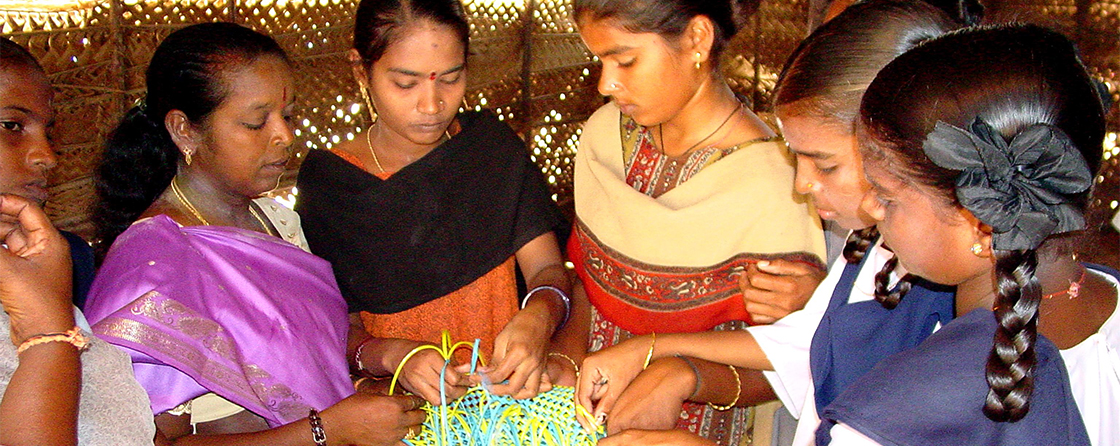
While metropolitan cities are framed as emancipatory spaces for women migrants, we know less about their experiences in smaller cities, which are driving urban transformation in India. Drawing on pre-pandemic fieldwork with employed youth (aged 15–29 years) in Mangalore and Kishangarh, this article investigates young women’s work, education, aspirations and mobilities in smaller cities which have relatively weak scalar positions in terms of global economic, political and social power. This article finds that small cities act as regional action spaces for women from villages and small towns to capitalise on fleeting opportunities and push against patriarchal boundaries through mobilities. It shows how women use a range of strategies from individual power tactics within households to leveraging institutional support systems to do so. The article suggests that situating migrant-friendly policy initiatives in small cities can potentially improve employment and mobility outcomes for young women.