The use of mobile devices to deliver public health interventions is rapidly increasing, particularly in low resource settings. Despite their proliferation, several mHealth interventions in developing countries fail to reach geographical scale, and long-term sustainability for most remains uncertain. Cost estimates can contribute to a more informed debate on resource allocation priorities and help make choices clearer for policymakers.
This paper has two main objectives:
(1) present a detailed protocol on determining the costs of a large national mHealth job aid and behavior change communication tool known as Integrated Child Development Services – Common Application Software (ICDS-CAS) in India, and
(2) to present lessons for policymakers on how to ensure financial planning for scaling mHealth interventions.
The study uses the Activity Based Costing—Ingredients (ABC-I) method. The major advantage of the ABC-I method is the clarity it brings to costs for each input and activity, across levels and geographies. It also accounts for indirect costs. There are five key lessons while costing for mHealth programs. The evidence generated can be used for more informed debate on resource allocation priorities, given competing priorities in low- and middle-income countries.
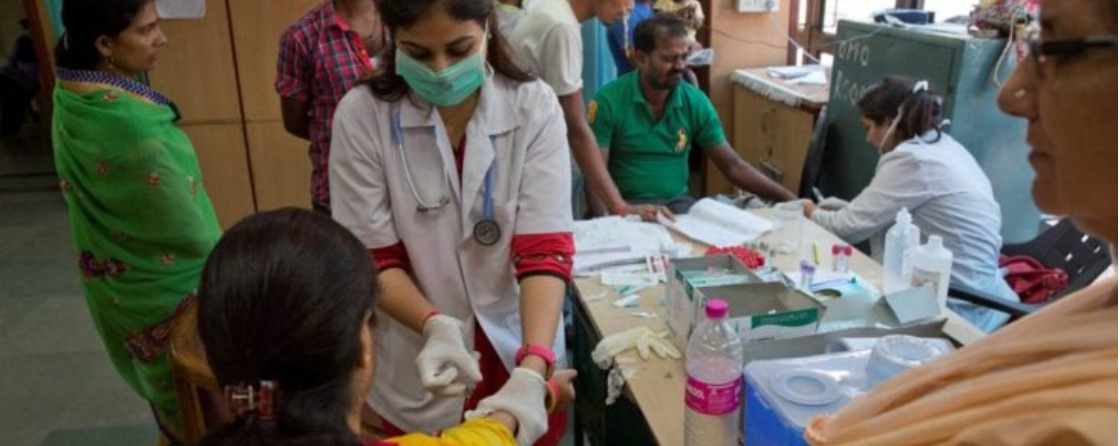
In India, 15 nutrition interventions are delivered and financed through the National Health Mission (NHM). Programmatic know-how, however, on tracking nutrition budgets in health sector plans is limited. Following the four phases of the budget cycle—planning, allocations, disbursements and expenditure, this paper presents a new method developed by the authors to track nutrition budgets within health sector plans. Using the example of the Anemia Mukt Bharat (AMB) or Anemia Free India strategy, it reports preliminary findings on the application of the first two phases of the method, that is, to track and act for improved planning and allocations, covering 12 states. The paper lists out the budget heads, cost norms and developed tools to plan adequately. Supportive action was undertaken through sharing trends and trainings for AMB’s budgeting to create opportunities for improvements. It was observed that the AMB budget increased over 3 years despite the COVID situation. It increased from INR 6184 million in FY 2019–2020 to INR 6293 million, a 2% increase in FY 2020–2021, and to INR 7433 million, an 18% increase in FY 2021–2022. The difference in allocations and planned budgets were low (16%, 4% and 11%, respectively) while the difference in required budgets and planned budgets were significant but reduced consistently (41%, 31% and 22%, respectively). The paper concludes that the methods adopted for tracking and acting for improved nutrition budgets helped in informing national and state governments regarding yearly trends. Such methods can be effective and be developed for other nutrition interventions.
Families in Flint, Michigan, protesting lead in their water, indigenous groups in the Amazon asserting control over their rivers, slum dwellers in India worried about disconnection or demanding cities bring potable water to their neighborhoods, an entire city in South Africa worried about the day when they will run out of water altogether—all these and many more have claimed the human right to water as the vehicle to express their demands. Where does this right come from, and how is its meaning constructed? In this article, we show that, in sociolegal terms, the global right to water, as are many others, is constructed out of the myriad struggles and claims of people who feel the lack of something that is essential to a dignified existence, and who cannot obtain an adequate response from their immediate political and legal environment. They do so in loose conversation with, but relatively unconstrained by, the meanings that are being constructed by the international and domestic legal experts who work on formal legal texts. We draw on research carried out around the world by a team of scholars whose articles are included in this Special Issue of the journal to illustrate the decentered construction of the right to water.
Religious division formed the basis for the subcontinent’s partition and has continued to be a major social cleavage in local relations. Yet remarkably religious parties have rarely been successful in India. This may be changing with an ascendant Bharatiya Janata Party mobilizing the Hindu vote. Accordingly, this article seeks to explicate the conditions under which successful religious parties may emerge. In order to do so, I conceive of electoral mobilization on religion as a form of ethnic mobilization, what I refer to as religion-as-ethnicity voting. I argue that religion-as-ethnicity voting emerges when the religious group meets certain spatial demographic criteria (density and pivotality) and when a governing party representing these interests can use state power to reify boundaries between religious groups. I use this framework to explain the emergence of the Hindu vote in the Indian state of Assam.
Religious conversions, especially with allegations of force involved, have continued to be an issue of concern among Indian state administrations since pre-independence. Following the Constitution of India coming into force, a specific right under Article 25 of the Constitution provided all persons with the freedom to profess, practice and propagate religion, the last of which has been the subject of much controversy. Early state legislations prohibiting “forced conversion”, which placed restriction on religious practitioners seeking to convert others, were upheld by the Supreme Court as reasonable restrictions on Article 25 of the Constitution on the grounds of public order in Rev. Stainislaus v. State of Madhya Pradesh.
A newer set of laws since 2000 has, however, sought to place additional substantive burdens on individuals seeking to change their religion and bring them under intensive surveillance by the State. Analysing a cross-section of these laws from different states, this article argues that these newer provisions are unconstitutional for three reasons: they are in excess of the restrictions permitted in Stainislaus, they violate Article 25 of the Constitution, and are not saved by the exception in public order. Additionally, these restrictions deeply infringe the individual’s right to privacy which had not been well developed in Indian jurisprudence at the time of the decision in Stainislaus, but is now clearly defined by a nine-judge bench in Justice K. S. Puttaswamy v. Union of India.
How did India’s capital of more than 20 million widen its food security net to reach underserved populations during the 2020 COVID-19 lockdown? Using publicly available data, government orders and insights from informal settlements, the article discusses the lessons from the Delhi government’s food relief efforts on universalising food security benefits.
This study attempts to carry out an empirical investigation regarding the role of marriage as a structural constraint to women’s employability in India. The National Sample Survey data based analysis shows that the heterogeneity of women’s employment is significantly controlled by their orientation to work where marriage acts as an important mediating factor. Significant differences are observed between the workforce participation of currently married and never married women across different educational attainment and socio-demographic segments. However, the way marriage operates as a formal barrier to women’s workability merely depends on the historically available opportunities and constraints experienced by them.
‘Every Hindu living anywhere in the world has the right to come to India when he faces problems there’, proclaimed Assam Chief Minister Himanta Biswa Sarma at an event in New Delhi last November. Many in the ruling party have long wanted this to be the prevailing common sense of the country. The passage of the Citizenship (Amendment) Act (CAA) through Parliament in December 2019 was for them a major accomplishment toward that goal. Yet few would have expected such sentiments to be expressed by an elected chief minister of Assam, especially one heading a government that includes some veterans of the Assam Movement (1979-1985), whose legacies remain live, unresolved issues in the state’s politics.
The defining feature of this movement’s ideology – rooted in a local past that predates the Partition – was its historically constituted opposition to unauthorized immigration from across Partition’s eastern border irrespective of faith. The six years of political turmoil saw the collapse of four elected ministries, the outbreak of an armed insurgency, and three spells of president’s rule. Even the 1981 Census operations had to be suspended in Assam because of this turmoil. The violent elections of 1983, including the horrendous Nellie massacre, are also part of this history.
India will occupy the rotating presidency of the Group of 20 (G20) in 2023. Planning for this mega-event will move into high gear in 2022 as India formally becomes part of the ‘troika’ of nations by which the G20 manages its affairs: regular meetings between the outgoing presidency (2021 Italy); the current presidency (2022 Indonesia); and the forthcoming presidency (2023 India).
As one of the world’s largest economies, India has an abiding interest in a global environment that supports its economic transformation. Since 2009 the G20’s leaders have repeatedly committed themselves to using their influence to restore and maintain strong, balanced, sustainable and inclusive global economic growth.
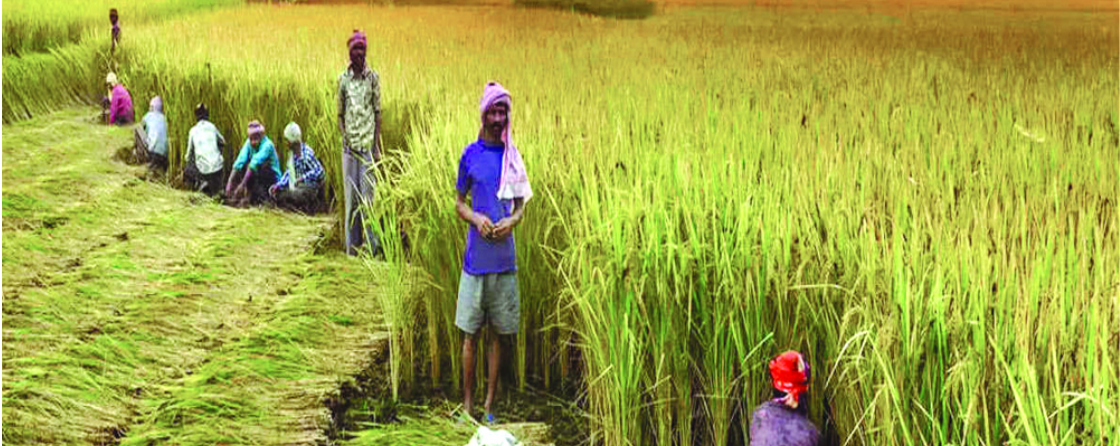
Over the last year, the physical presence, economic place, and political magnitude of Indian farmers and farming have occupied the national capital region and preoccupied national public debate in a truly extraordinary manner. The ensuing polarization has also brought to the surface some of the most deep-rooted and deeply felt contradictions of agrarian economy and society in contemporary India.
The conflicting perspectives that define this moment are well known but bear repeating. At the end of 2021, with the Union government’s repeal of the three farm laws, the historic farmers’ protest has been heralded by many as a lifeline for a battered democracy and broken federal compact. But this same show of collective strength has been vilified by others, who view the entrenched political economy of agriculture as the most regressive roadblock in the way of economic progress.